
On Aug. 2, 1990 Iraq's military forces invaded neighboring Kuwait. Iraq's president, Saddam Hussein, having fought Iran to a stalemate from 1980 to 1988, was deeply in debt and needed more money for his war machine. He claimed that the oil reserves along the border with Kuwait belonged to Iraq. He also accused Kuwait of pumping too much oil, thereby lowering world prices. The invasion was almost universally condemned in the world community. The United Nations passed a series of resolutions demanding that Iraq withdraw. In cooperation with the United Nations, United States President George Bush assembled a coalition of nations to send troops to the Persian Gulf region, ostensibly to defend Saudi Arabia. U.N. sanctions, mainly in the form of an embargo, were instituted against Iraq. When, in the next few months, Iraq gave no indication of backing down, the U.N. passed a resolution allowing for military action if the Iraqi forces were not pulled out of Kuwait by Jan. 15, 1991. By this time President Bush had more than doubled the U.S. military forces in the Persian Gulf. When Iraq did not comply, the Allied forces launched air and missile attacks on January 16, an offensive called Desert Storm. Iraq's response was relatively mild, considering the size of its armed forces. It fired numerous Soviet-made Scud missiles against Saudi Arabia and Israel but launched no offensive. More than 600 oil wells had been set afire by the Iraqis. On February 27 President Bush announced that Iraq had agreed to a cease-fire. Saddam Hussein remained in power and launched devastating attacks against rebellious Kurds within Iraq.
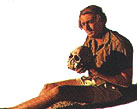
Anthropologists announced the discovery of the first nearly complete skull of a pre-human, apelike animal. The find was made near the Awash River in northern Ethiopia. Believed to be the skull of a male that lived about 3 million years ago, the skull fills in one of the gaps in understanding the earliest evolution of humans. The species to which the skull has been assigned is Australopithecus afarensis, which is believed by many anthropologists to be the single species that underlies all later human evolution. The species lived between three and four million years ago. The discoverers believed the skull confirms the hypothesis that the various fossils from the same period belonged to one species, not two. The skull belongs to the same species as "Lucy," the skull-less remains of a female discovered in 1974 within a mile of the more recent find. The recent find dates from 3 million years ago, while the Lucy fragments have been dated earlier.

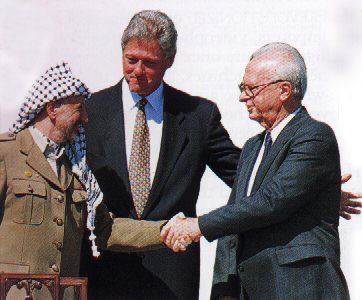
Only minutes after he addressed a "Peace Yes, Violence No" rally in Tel Aviv, Israel prime minister Yitzhak Rabin was assassinated. The rally had been called to stem the tide of right-wing resentment at the concessions made to Palestinians over self-rule. A lone gunman (25) shot him twice at close range. The murder changed Israelis attitude toward politics, forever.