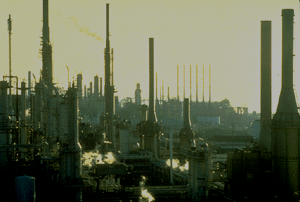
 Oil is stored in large tanks until it is sent to various places to be used.
 There are three major forms of fossil fuels: coal, oil and natural gas. All three were
formed many millions of years ago during the time of the dinosaurs -- hence the
name fossil fuels.
There are three major forms of fossil fuels: coal, oil and natural gas. All three were
formed many millions of years ago during the time of the dinosaurs -- hence the
name fossil fuels.Fossil fuels are made up of decomposed plant and animal matter. Plants change energy they receive from the sun into stored energy. This energy is food used by the plant. This is called photosynthesis. Animals eat plants to make energy. And people eat animals and plants to get energy to do work.
When plants and dinosaurs and other ancient creatures died, they decomposed and became buried, layer upon layer under the ground. It took millions of years to form these layers into a hard, black colored rock-like substance called coal, a thick liquid called oil or petroleum, and natural gas. Fossil fuels can be found under the earth in many locations around the country. In California, we have oil and natural gas resources.
Each of the fossil fuels is extracted out of the ground differently.
Coal used in power plants is not found in California but is abundant in other states. It is mined in deep mines or in strip mines closer to the surface and brought to California to power a few small power plants.
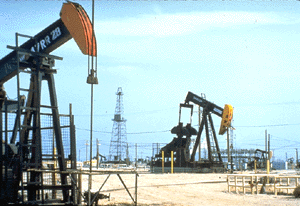
 To find oil and natural gas, companies drill through the earth to the deposits deep
below the surface. The oil and natural gas are then pumped from below the
ground by oil rigs (like in the picture above). They then usually travel through
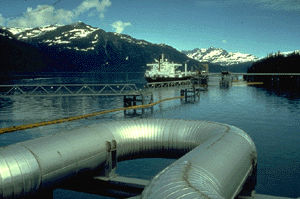
pipelines, like the ones in the picture to the right in Alaska.
To find oil and natural gas, companies drill through the earth to the deposits deep
below the surface. The oil and natural gas are then pumped from below the
ground by oil rigs (like in the picture above). They then usually travel through
pipelines, like the ones in the picture to the right in Alaska.Oil is found in 18 of the 58 counties in California. Kern County, the County where Bakersfield is found, is one of the largest oil production places in the country. But we only get one-half of our oil from California wells. The rest comes from Alaska, and a small amount comes from other countries. This oil is brought to California by large tanker ships. The petroleum or crude oil must be changed or refined into other products before it can be used.
Oil is stored in large tanks until it is sent to various places to be used.
Oil is also made into many different products -- fertilizers for farms, the clothes you wear, the toothbrush you use, the plastic bottle that holds your milk, the plastic pen that you write with. They all came from oil.
There are thousands of other products that come from oil. Almost all plastic comes originally from oil. Can you think of some things made from oil?
At oil refineries, crude oil is split into various types of products by heating the thick black oil.
The products include gasoline, diesel fuel, aviation fuel, home heating oil, oil for ships and oil to burn in power plants to make electricity.
But in California, 74 percent of our oil is used for transportation -- cars, planes,
trucks, buses and motorcycles. We'll learn more about transportation energy in Chapter 13.
 Natural gas is also found in California. We use more than what is found in
California. So, we also bring natural gas to California from other states and
from Canada.
Natural gas is also found in California. We use more than what is found in
California. So, we also bring natural gas to California from other states and
from Canada. Natural gas is lighter than air. Natural gas is mostly made up of a gas called methane. Methane is a simple chemical compound that is made up of carbon and hydrogen atoms. It's chemical formula is CH4. This gas is highly flammable.
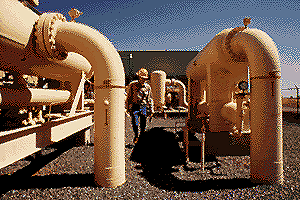
Natural gas is usually found near petroleum underground. The natural gas is pumped from below ground and sent in large pipelines like the ones to the right.
Natural gas usually has no odor and you can't see it. Before it is sent to the pipelines and storage tanks, it is mixed with a chemical that gives a strong odor. The odor smells almost like rotten eggs. The odor makes it easy to smell if there is a leak.
From the storage tanks natural gas is sent through underground pipes to your home to cook your food and heat your house. Natural gas is also sent to factories and to power plants to make electricity. We'll learn more about the pipelines in California in Chapter 12.
So, it's best to not waste fossil fuels. They are not renewable; they can't really be made again.
We can save fossil fuels by conserving energy.
We'll learn more about saving energy in Chapter 14.
*****