Biocontrol Technology, Incorporated
Telephone: (412) 429-0673
Fax: (412) 279-1367

Non-Invasive Blood Glucose Monitoring
The are several non-invasive blood glucose monitoring available in the market
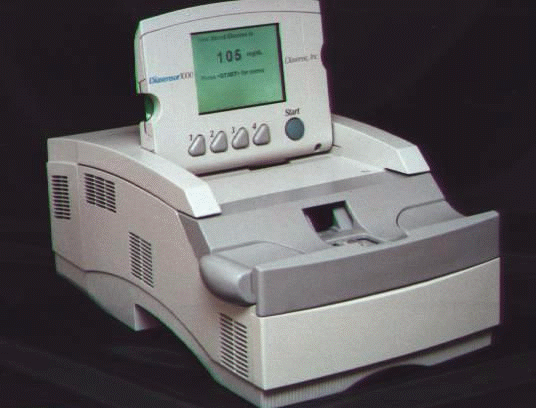
| Infra-red light passes through the skin into the blood and is reflected back intot he sensor. The reflected light is analyzed and converted into blood glucose level and displayed on the screen |
| The Diasensor 1000 is manufactured by:
Biocontrol Technology, Incorporated
|
| By passing infra-red light through patient's finger and sensing the
amount of scattered light, the system can detect and predict glucose concentration
from collected near infra-red (NIR) light at various wavelength with an
acceptable level of accuracy.
Patent No 5,553,616
|
| SpectRx Non-Invasive Diabetes Screening Test
Spect Inc. The system works by measuring the intensity of the flourescent and scattering in the lens of the eye. The measurement is performed through a undilated pupil with the assistance of the pupil tracking system. Boehringer Mannheim Corporation (BMC)
|
| About Non-Invasive
Blood Glucose Monitor
At the moment, non-invasive technology is still in the experimental stage. There are for use in the United States. Though the Diasensor 1000 is allegedly approved for use in Germany and
the United Kingdom, we know of no one who has actually purchased a unit.
|
 Futrex
Inc
Futrex
Inc
| Optical Signature - glucose has its own unique pattern of "light energy" at different near infra-red wavelengths measurement of glucose in the blood through the intensity of the glucose optical signature |
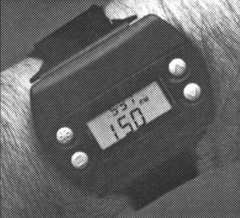 The
Glucowatch by Gygnus
The
Glucowatch by Gygnus
| Electro osmosis- uses low level of electric current to extract
glucose molecules through intact skin. Glucose molecules are collected
in a small, daily disaposable Gluco Pad, which adhere to the skin and is
connected to a sensor. The glucose triggers an electro chemical reaction
with a reagent in the gluco pad generating an electric current.
The sensor measures the electron and a custom application specific integrated
circuit in the glucowatch equates the level of electron emmission to a
concerntration of glucose in the patients blood.
|
|
|
 Roslee
Abdul Jalil
Roslee
Abdul Jalil