Bragg's law says that waves are sensitive to sets of planes in crystals. It is difficult to visulise all the planes in a lattice.
3.2 Why We Want To Visualise Penodicities
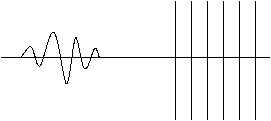
Figure 3.1 - Bragg's Law in One Dimension
Whenever nl/2=d particle will be infinitely backscattered. It moves back and forth where the only solution is a standing wave. The particle cannot move and the wave vector becomes k=2p/l . This occurs at the Bragg Condition
K=n
æ ç ç è
p
d
ö ÷ ÷ ø
3.3 Define Reciprocal Space
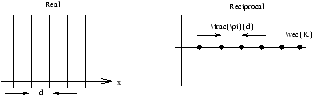
In three dimensional space the axes have units of length. A Penodicity corresponds to a point with coordinates perpendicular to the planes and the length ( np/d ).
Figure 3.2 - One Dimensional Penodicity
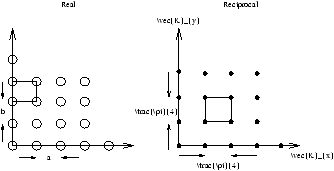
Figure 3.3 - Two Dimensional Penodicity
where the reciprocal can be interpreted directly as the momentum space so that p=K .
3.3.1 Example - Bragg Diffraction in Reciprocal Space
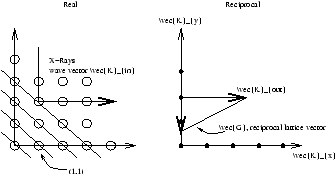
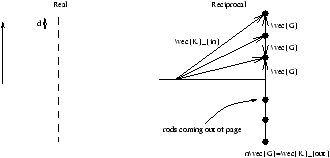
Figure 3.4 - Bragg Diffraction in Reciprocal Space
2dsinq=nl Kout=Kin+G
there are two ways of describing the same physical effect. G is a generalised real vector for example any vector joining two reciprocal lattice points.
The relevant G (the scattering vector) is always perpendicular to the scattering planes.
3.4 K-Space Ideas
From reciprocal lattice scattering geometry we see that
|G|=2|vecK|sinq
Þ l =2
æ ç ç è
2p
|vecG|
ö ÷ ÷ ø
sinq
this can be compared to Bragg's Law
dhkl=
2p
|G|
there is a straight correspondence between the possible G 's and the periodicity identified by Bragg. It is much easier to think of the periodicity as reciprocal lattice vectors instead of as Bragg planes. Crystals can only give (or get) momentum in units of G .
Figure 3.5 - Momentum Transfer in Reciprocal Space For a Diffraction Grating