
| When
someone says "I have a Cocker Spaniel" most Americans picture the familiar
buff colored American Cocker Spaniel. A very popular breed in the
USA.
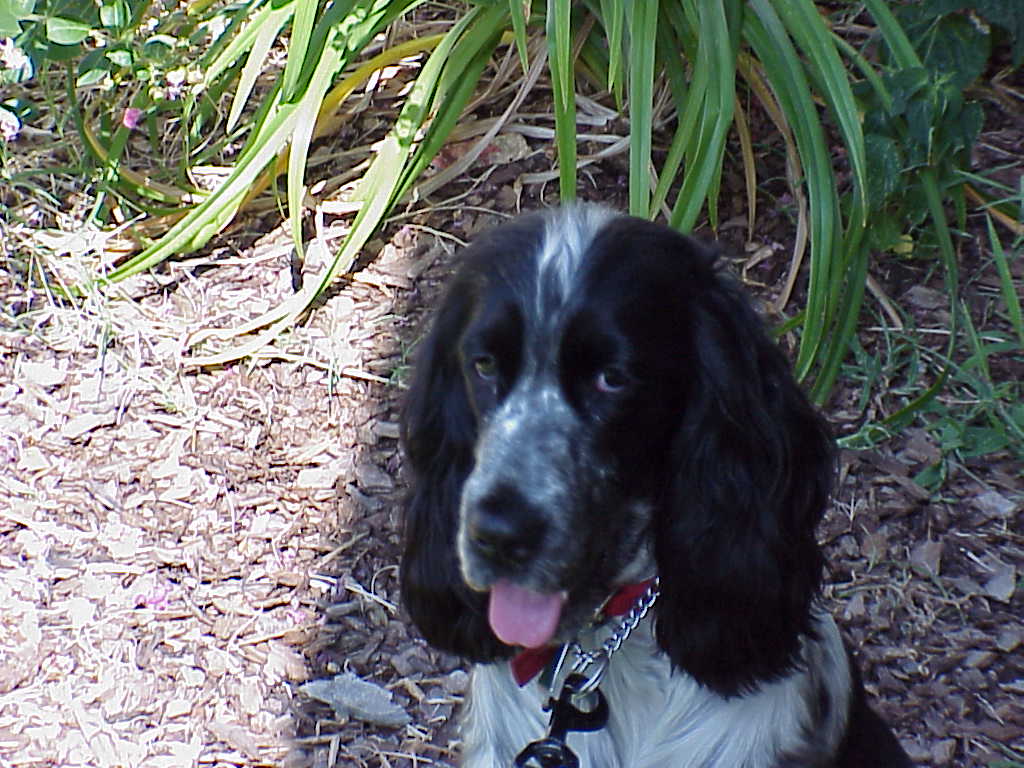
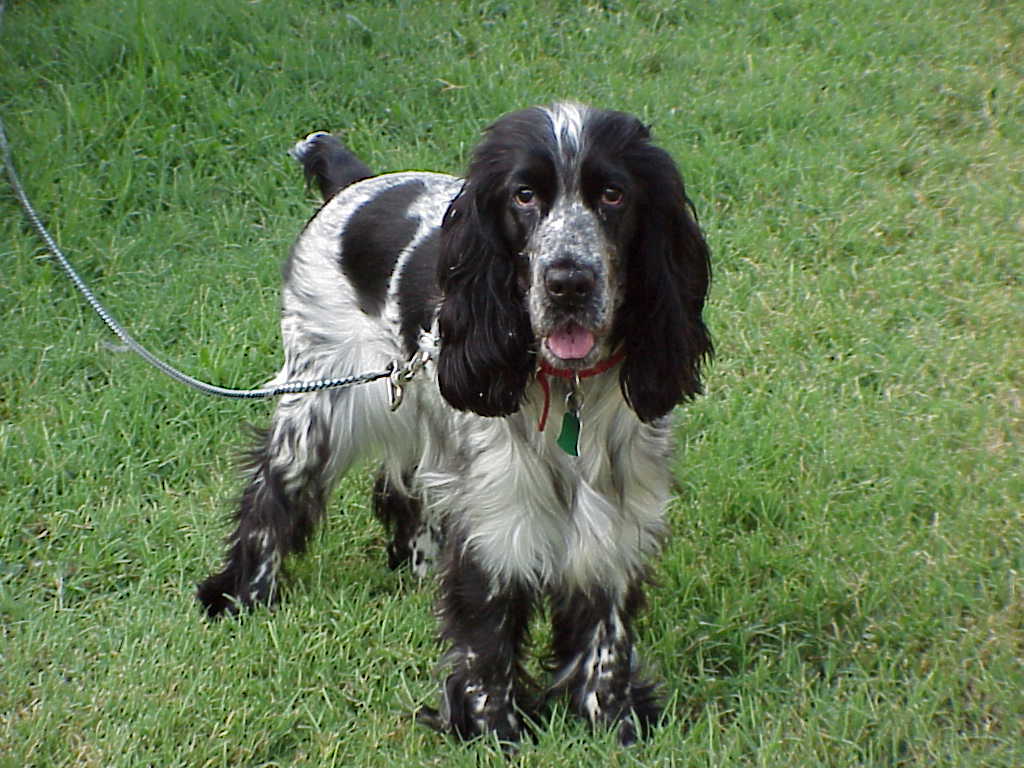
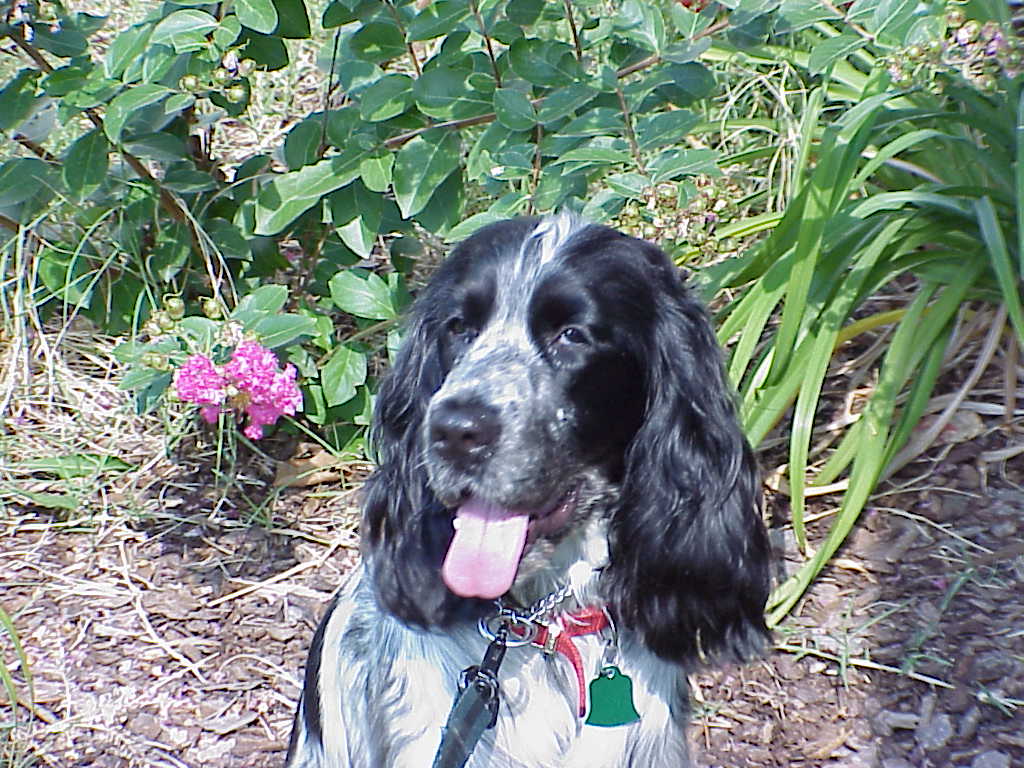
However, everywhere else in the world the breed 'Cocker Spaniel' refers to the 'English Cocker Spaniel'. A separate breed, with distinctive differences noted in the shape of head and slightly larger appearance. So, we are not surprised when we are asked "What kind of dog is that?". Most inquiring folks have never heard of the English Cocker Spaniel. A small and special group of "doggie parents" are lucky enough to know this wonderful breed. We are proud to be included in this special group. "Georgia" is a lovely blue roan, with a merry disposition, who loves to travel everywhere with us. We gathered information, and read plenty of good books about English Cocker Spaniels as we began our search for our special traveling companion. One source stated that "the worst thing to be said (about English Cocker Spaniels) is that, on a walk around the block, he'll find and splash through every puddle along the way". Boy were they right! Georgia loves the water. The water in puddles, the water under the boat, the water at the beach, and oh yes, the water dripping from the outside faucets. |
| The
English Cocker Spaniel retains popularity for a variety of reasons.
First, compact size, averaging about 16 inches at the shoulder and
about 30 pounds, is small enough be a practical house dog for a family
of moderate means, but still large enough to be hardy. For comparison,
English Cockers should be slightly larger than American Cockers, Beagles,
Shetland Sheep dogs, Miniature Schnauzers, and Miniature Poodles, yet smaller
than Springer Spaniels, Norwegian Elkhounds or Keeshoden. There are several
breeds, particularly among the Terriers, that are in the same height range,
but generally English Cockers are more sturdily built.
The ideal coat which the English Cocker has retained for decades is flat and silky on the body with moderately long feathering on the ears, chest, belly and on the backs of the front and rear legs. This type of coat is attractive and easy to care for, requiring clipping around the head and ears only, and scissor trimming around the feet and tail for neatness, plus regular brushing and combing. Some may not have the ideal coat, being bushy or woolly. Even the ideal coat, if not properly cared for, may create problems with shedding, matting and an overall unkempt appearance. Regular grooming should decrease these problems. |
The
English Cocker has retained a remarkable amount of hunting instinct
and ability. Most have superb "noses" and usually require very little training
except perhaps some basic obedience. The English Cocker is designed for
going into and under thick brush. The English Cocker is too small to be
expected to go all day in deep grass or cattails. Most are natural
retrievers and enjoy water.
Other
characteristics set the English Cocker apart. The head is longer, narrower
and more Setter like than
The English Cocker is a versatile breed and an ambitious owner may find enjoyment is a variety of activities. These
Cockers are primarily household pets, with a major goal in life to
be an integral member of the family. It can be expected that they will
prefer your bed to their own and cannot understand why they are not permitted
to be with
|
| English Cockers are quite trainable and respond well to the attention. Obedience training classes are available in most areas of the country. Once trained, they are not only easier and more fun to live with, but also eligible to compete for prizes and titles at American Kennel Club Obedience Trials. | A surprising percentage of English Cockers have retained a strong hunting instinct. The instincts to retrieve and to go to water may be variable, but gun shyness or a hard mouth is a rarity. English Cockers make fine companion hunters requiring little training. For those who are ambitious, the English Cocker Spaniel Club of America offers Working Certificates to dogs who can demonstrate reasonable ability in the field. | Championship Field Trials for Cockers were discontinued in 1965, but have resurfaced in recent years. While there are no trials specifically for English Cockers, it is possible that field trials specifically for English Cockers may be revived in the future. Meanwhile, a Field Trial Championship is attainable by participating in Cocker/English Cocker Spaniel Field Trials. The American Kennel Club also offers Spaniel Hunt Tests, which leads to the Junior Hunter, Senior Hunter and Master Hunters titles. | Many English Cockers owners in recent years have discovered the sport of "Tracking," a skill usually attributed to Bloodhounds and Search Dogs. The breed as a whole has exceptional scenting powers and learns tracking quickly. The American Kennel Club offers a Tracking Dog title to dogs capable of passing the test. More advanced tracking tests are available for an ambitious owner. |
 |
|
 OUR
HARBOR OUR
HARBOR |
DOG
GONE GREAT |
WILD
WEST |
FISH
TALES |
OUR
SHORES |
LAND
SCHOONER |
X
Treks |
|
|

HANDS FARM |
|

GREAT DOGGIE LINKS |