 Zacatecas
is a beautiful city located in the heart of Mexico. It is the
capital of the State of the same name located 613 km from Mexico City,
by the federal highways 57 and 45. Zacatecas, an early mining town was
founded in 1546 after the discovery of silver. It is the first producer
of silver in all Mexico and it produces 20% of world's silver. One
of the silver mines is located in Noria de Angeles, 15 Kilometers from
the city where I was born. This early colonial town became only second
to Mexico City during the colonization period in population and economic
influence. The city reached its height in the 16th and 17th centuries.
In 1995 the state's population was 1,336,496 and it covers 75.040 square
Km (28,973 mi), at an elevation of 2440 m (8000 ft) above sea level.
Its major resources are its forests and mineral deposits. Nearly
half of the state's economically active population works in agriculture,
followed by commerce and construction. It is part of the Sierra
Madre (one of Mexico's largest mountain ranges) and its environment is
incredible. The climate is semiarid generally dry and warm
in the valleys and cooler in the mountains. It is bordered by the
states of Jalisco, to the South, San Luis Potosi, to the East, Aguascalientes
to the West, Durango and Cohauila to the North. Its people are nice
and helpful with the tourists. It has many important museums such as The
Mineralogy Museum that show the minerals and the mines located in the state.
The Universo de Pedro Coronel Museum, where artistic works from different
parts of the world are exhibited. It has theaters such as The
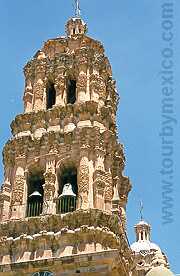
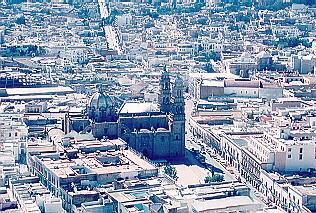
Calderon Theater built in the XIX century. Its Cathedrals built
in the XVIII century are beautiful and so important to their people.
The predominant religion is Roman Catholic. Its monuments are
archeological features attract the tourists each year to this beautiful
culture.
Zacatecas
is a beautiful city located in the heart of Mexico. It is the
capital of the State of the same name located 613 km from Mexico City,
by the federal highways 57 and 45. Zacatecas, an early mining town was
founded in 1546 after the discovery of silver. It is the first producer
of silver in all Mexico and it produces 20% of world's silver. One
of the silver mines is located in Noria de Angeles, 15 Kilometers from
the city where I was born. This early colonial town became only second
to Mexico City during the colonization period in population and economic
influence. The city reached its height in the 16th and 17th centuries.
In 1995 the state's population was 1,336,496 and it covers 75.040 square
Km (28,973 mi), at an elevation of 2440 m (8000 ft) above sea level.
Its major resources are its forests and mineral deposits. Nearly
half of the state's economically active population works in agriculture,
followed by commerce and construction. It is part of the Sierra
Madre (one of Mexico's largest mountain ranges) and its environment is
incredible. The climate is semiarid generally dry and warm
in the valleys and cooler in the mountains. It is bordered by the
states of Jalisco, to the South, San Luis Potosi, to the East, Aguascalientes
to the West, Durango and Cohauila to the North. Its people are nice
and helpful with the tourists. It has many important museums such as The
Mineralogy Museum that show the minerals and the mines located in the state.
The Universo de Pedro Coronel Museum, where artistic works from different
parts of the world are exhibited. It has theaters such as The
Calderon Theater built in the XIX century. Its Cathedrals built
in the XVIII century are beautiful and so important to their people.
The predominant religion is Roman Catholic. Its monuments are
archeological features attract the tourists each year to this beautiful
culture. 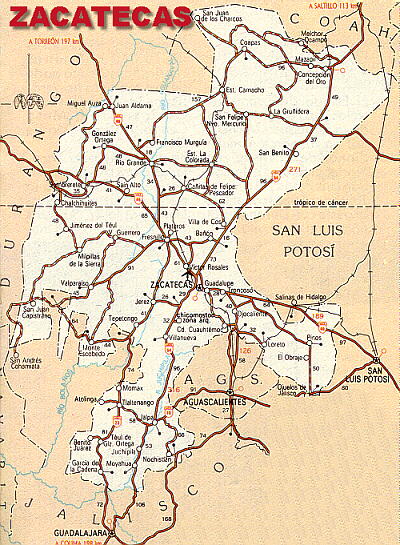
Sierra de Organos
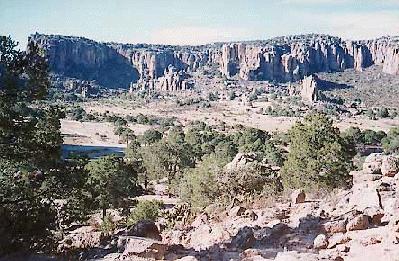 Sierra de los Organos, or Valley of the Giants, is about 7 kilometers north
of the highway (though sign posted as further) close to the nondescript
small village of San Francisco de los Organos. The junction
is about 12 kilometers west of Sombrerete along the main Durango road.
The dirt track to the Sierra de los Organos is passable all year in regular
vehicles, though care should be exercised when crossing the small dry gullies,
which are enlarged following every rainy season. Given the
multitude of tracks, when in doubt at any bifurcation, choose either the
more traveled track or that which is nearer the rocks. The
track passes a small lake, teeming with migratory birds during the winter.
Sierra de los Organos, or Valley of the Giants, is about 7 kilometers north
of the highway (though sign posted as further) close to the nondescript
small village of San Francisco de los Organos. The junction
is about 12 kilometers west of Sombrerete along the main Durango road.
The dirt track to the Sierra de los Organos is passable all year in regular
vehicles, though care should be exercised when crossing the small dry gullies,
which are enlarged following every rainy season. Given the
multitude of tracks, when in doubt at any bifurcation, choose either the
more traveled track or that which is nearer the rocks. The
track passes a small lake, teeming with migratory birds during the winter. 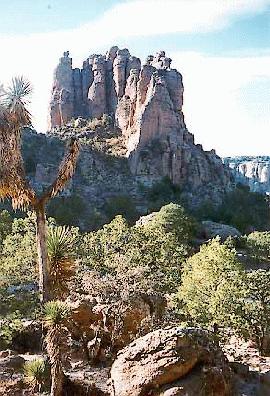
Traditions
Mescal is one of the traditional natural beverages.
It is made of the "Maguey", a typical plant in Zacatecas. The
traditions are mostly about historical events like the Independence of
Mexico (1810-1821) and the Mexican Revolution (1910-1920). The independence is celebrated with the President of the Republic. The day before
it, September 15, the President of Mexico shows out in a window of Los
Pinos, the President's official residency, and he shows a flag proclaiming
"Viva Mexico" like the priest Miguel Hidalgo did the night of September
15 of 1810. However, the Mexican revolution is celebrated different.
They have parties and gun shots during the day. they also have horse
racing and chicken fights, it sounds funny but they are very traditional.
Every anniversary of these two important events, all the schools march
in all the streets of all the city where they belong. They
have "La banda de guerra" (The battle band) that goes all the way marching
and playing music celebrating the anniversary. Part of the Mexican
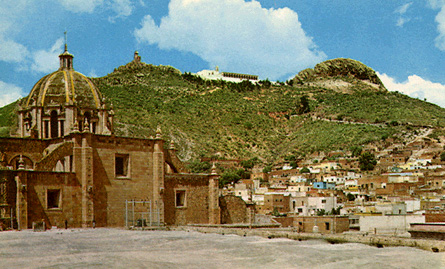
revolution was fought here in Zacatecas in Bufa's hill and in Grillo's
hill. Take a look on this two links to see the "maguey" 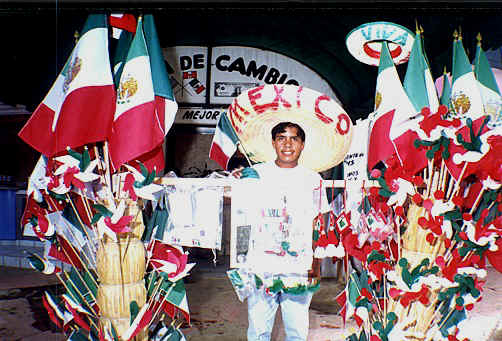 and a boy celebrating the independence.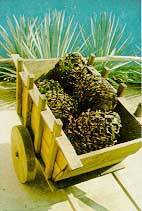
To know more about Zacatecas' most famous cities Click
here
To see the most amazing ports in Mexico, Visit:
Manzanillo Puerto Vallarta