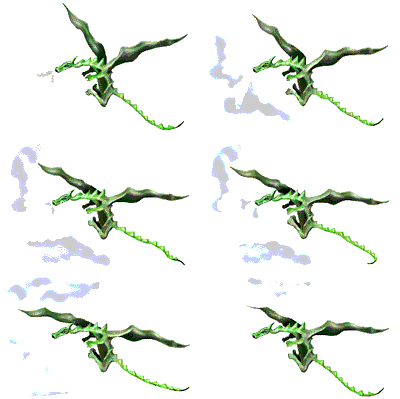
Dragons do fly, but they are so large that they can't stay up for long, not on their own power anyway. They
must find a thermal(hot air rising usually in a spiral) and glide around. If they don't have a thermal they
can still fly but not for very far(relatively, about half a mile) like a chicken, short repetative flaps of
the wings and a strong leap into the air. They will jump up and pump their wings extremely hard for about
30 seconds. This is used to get out of danger and to catch prey, sometimes. When Dragons do catch their thermal,
they can fly all the way to the ionosphere. This does cut down on the oxygen level but if you have read 'How Do
Dragons Breathe Fire' then you will know that this does not matter. Being in the ionosphere, the air being very
thin, allows the Dragons to go much faster so then aerodynamics will account for the Dragons large mass and they
will no longer need a thermal(until they leave the ionosphere and return to the lower part of the atmosphere)
Dragons do not have cartilage instead of bone, or just plain solid bone,(as some Draconologists think) but they
do have hollow bones, like birds. This would cut down on their weight. They are also highly streamlined. When in
the ionosphere a Dragon can stay up in the air for more than a day, they have been known to sleep while gliding.
Dragons will catch prey much like the 'birds of prey', they will glide down and extend their hind feet in a
grasping position. Then they will beat their wings several times before they hit their prey, the force will most
likely break the prey's spine instantly. The one difference between the Dragon's method and the bird of prey's is
that the Dragons don't pull up after catching their prey, for it would be too difficult, they will land on the ground
and eat it there.
Dragons have three eyelids. They have one transparent, one opaque, and one external. the clear one is used for flying,
when the Dragon needs to see where he is going. The opaque eyelid is for when the Dragon is flying, but does not need
to see where it is going, and also to protect it's eyes from the suns bright rays, because in the ionosphere there
are no thick clouds in which to block it.