|
|
|
Hydroponics Systems can be generally classified into two categories.
A. Passive To better understand "pure hydroponics" we will briefly touch on each type, its merits and down falls. It is very important to understand these facts as there are many pitfalls for the novice in hydroponics culture of plants. A. Passive A passive system is one where the water containing the nutrients does not re-circulate but indeed is "stagnant". The most common passive system consists of a container or containers linked together of varying sizes and capacities, from ten liters to 1,000 liters. As an example, a container measuring 2m L x 1m W x 0.3m H would have a nutrient capacity of 600 liters. The surface area would be 2 square meters. On top of the water in the container, a floating board is placed. This can be styrofoam about 30mm thick. Holes are cut into the foam in a regular pattern with ample spacing for the plants, about 25cm apart. Soluble nutrients (fertilizer) are mixed into the water in the container, in correct amounts, about 1500 ppm (parts per million) and the pH level lowered to about pH6. Some chlorine (2 ppm) is then added to try to combat pathogens that thrive in stagnant and warm water. Seedlings are then placed in small plastic net cups containing some form of media (perlite, volcanic cinders) to hold the plants upright during their initial growth stage. These cups are pushed into the styrofoam so that the bottoms are touching the water. The cultivator now waits, hopes and prays that the plants will grow and bear fruit. If this is in Taiwan there may just be a chance. In the hot tropical conditions of the Philippines, there is zero chance of success. Why, you may well ask.
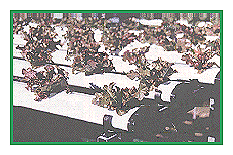
The main reasons are; 2. Warm stagnant water quickly depletes in oxygen content. Plants in water with depleted oxygen cannot take up the nutrients, suffocate and die. 3. Soluble nutrients in stagnant water soon precipitate and end up on the bottom of the container, especially the iron chelate. The plants, if they live long enough after pathogen attacks, will starve of vital "micro-nutrients" that are lying on the bottom of the container. In the colder season of Taiwan, they use the passive system with some positive results. Beware of trying to use this system commercially in the tropical conditions of the Philippines. B. Active An "active" hydroponics system is simply one wherein the nutrients re-circulate through and around the plant's roots in a controlled cycle. Commercially the most popular active hydroponics system is the Nutrient Flow Technique (NFT). The basic parts that go to make up an NFT hydroponics system are;
Advance Hydroponics invite your serious inquiries wherein we can work together to understand your requirements and purpose design and build your commercial hydroponics system. |








|