|
American People to People Professional Ambassadors Program & Other U.S. Academic Exchange Programs with Cuba |
|
Our Works and Photos in Havana with U.S. Professionals 2000-2008
Beginnings with PtP Supporting Havanatur
Other Friendly Personal Initiatives Taken
Outline of the PtP Ambassadors Program
Scientific U.S.-Cuba Cooperation Promoted
Very Special and Friendly Contacts Made
Works with Other U.S. Academic Programs
Political Fired from Havanatur in June 2002
Cuba Aborted 30 Exchanges in 15 U.S. Cities
Brief Auto-Biography of Rodolfo J. Stusser
Gallery of Photos with Our Guest Friends
Our Cuasi-Consular Works Havana-Spokane
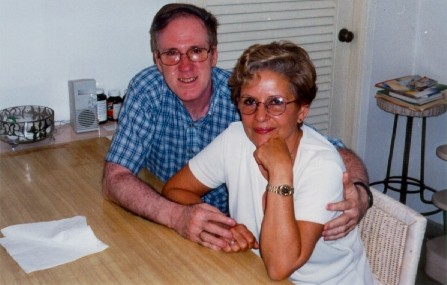
My wife Lolita, architect, and I have been exchanging and sharing, reestablishing trust with love, with more than 700 physicians, nurses, public administrators, natural, social & political scientists, engineers & architects of 36 People to People Professional Ambassadors Delegations and other organizations since November 6, 2000. In the one hand, we have updated as never before our knowledge in those matters, but in the other hand and the most important thing, we have understood each other more than never before --after 1958--, and this is helping to bring nearer our both neighboring countries again.
In this period we have been actively involved in many ways voluntarily working with Havanatur Tourism Agency and helping to the comprehension and empathy between the American and the Cuban professionals, with the only retribution than the duty with our fatherland fulfilled. We shall confess that our interaction with People to People Ambassadors Program has had a profound effect on us till the point that has changed our lives. We are in almost all our free hours dedicated to the study or meditation on how can we help to the successful march of the program in any way.
We feel very privileged Cuban professionals, because we know that this pioneer work is crucial to be able to develop in the future very strong professional collaboration links. These links began in the past since before 1762 when the Capture of Havana by the British, and became one of the first and strongest of the U.S. in Latin America and the Caribbean, in the first half of the 20-century. In addition, we know that this will help to come much closer our American and Cuban peoples, more early than late, when the political conditions in our homeland finally change.
It is interesting to note that in 1762, the Spanish Havana port was a more opulent city than the English Boston, New York and New Orleans, but less fortified than the Spanish Saint Augustine in US Florida, and for that reason it was the captured.
We are sure that Benjamin Franklin, Thomas Jefferson, George Washington and Abraham Lincoln, would be very proud of these American professional ambassadors, as well as we are sure that Felix Varela the "Havana University Professor and Priest that taught Cubans to think in Cuban and to be Cubans" (who lived and died in USA), Carlos Manuel de Céspedes the "Father of our Homeland", and José Martí the "Most Eminent Person of our Independence" (who lived in the USA the half of his life), among other Cuban patriots, would be very proud of our efforts too.
We are of the very few (surely less than 1%) Havanan survivors from before the arrival of the Revolution in 1959. We are a rare specie in extinction who know very well Havana City, Varadero Beach, and all Cuba since before and after, and hope to know it also in the future when Cuba changes and recovers again.
Beginnings with PtP Supporting Havanatur
I arrived to Havana on October 15, 2000, from an International Conference of Health Research for Development at Bangkok (supported exclusively by the World Health Organization/Global Forum for Health Research Foundation as in 1999 to Forum 3 at Geneva), and attended at a Cuban individual researcher title. In its marketplace created by the GFHR, WHO, COHRED, World Bank, Rockefeller Foundation, Canadian, Swiss, Norwegian and Swedish Agencies, I promoted some projects, of my own and personal Integration Science Program, not of my Clinical Research Center, and as an extra but that facilitated me to travel before Havana authorities, other vaccines projects of the Center for Genetic Engineering & Biotechnology, in front of 30 great world donors for global health research.
One night in the middle of that conference two officials of our Public Health Ministry and I, as researcher of the Scientific Productive Pole of West Havana gave to a scientific delegation of the Thai government, a talk requested to me two weeks before, about "The Health Research System in Cuba", as first step to begin the scientific collaboration between countries without diplomatic and even commercial relations yet. I also talked to different WHO/GFHR personalities of the conference, and at the end-plenary, I made a 3-minute personal reflections in that world meeting to more than 800 professionals of 100 countries on Global Health Research Governance.
The morning after, I participated in a Workshop of the Alliance for Health Policy and System Research in Bangkok too. In the year 2000, I had made my former Plaza Community Polyclinic and Clinical Research Center, partners of that alliance, and afterwards, in 2003 I made my former Vedado University Polyclinic also partner of it.
I informed many successful exchanges with the Director-General of the WHO, GFHR, COHRED, Rockefeller Foundation, etc., and my words in the last plennary on the World Governance of Global Health Research, to my Director of the Clinical Research Center. He elevated a copy to the Director of the Scientific Pole of West Havana, at the same time, Secretary of the Cuban State Council.
Some days after, through the Vice-Deputy of my Clinical Research Center, I knew that the Havanatur Tourism Agency was looking for a lecturer to talk to a "Group of Americans". Then, I knew that Professor Carlos Pazos, ex-Director and now Adviser in our Ministry of Public Health was also doing this extra non-remunerated job, so I accepted. I began to talk 2.5-3 hours in my free time and giving my personal view on "The Health Research System in Cuba", on November 6, 2000, in the Havana Melia Hotel once or twice a week, passing over certain apprehension and prejudices of my health and science ministry authorities.
Soon, I understood that I was as a single researcher a more suitable professional for Havanatur and for PTPAP than Prof. Pazos, Cuban state official before the International Organism against the Nuclear War, and in a certain way I continued doing his job with a more informal and open approach. I am founder of the crucial medical scientific training and research centers of Havana; professor of physiology first and of internal medicine and biostatistics later of Havana University since 1968, working gratis, without category and privileges; and researcher who since 1988, is waiting for the Cuban government permission to defend a Ph.D. thesis made in the Cuban Cancer Institute to receive the Ph.D. degree.
Years later, I knew that the Cuban PtP Program had begun in September 2000, two months before I entered in it, with difficulties of understanding and intolerance of the first lecturers with the delegations, who thought that had to report only the positive Cuban-Soviet-Chinese experience after 1958, before "U.S. imperialist and CIA agents" coming delegations, forgeting the great period of the Western Cuban medicine and public health between 1728 and 1958.
My wife Lolita, also speaks English and is a full connoisseur of many cities and places of the United States of America, including Miami (our overseas Cuban "Hong Kong" and/or "Taiwan" since the 1990s), in ten annual tourist trips with her mother Dolores Acosta Magriñat, born in Key West in 1903 and one of the first Cuban dentists, father Aurelio Espinosa Cruz, lawyer and President of the Lions Club of Havana, Cuba, and minor sister Raquel, before the distancing of the US and Cuba since 1959 when Soviet Union and red China entered openly in the island. She began to converse after the talks in the hotel lobby and buffet, with the wives of the delegates and with the women delegates too.
Lolita as architect has gone directing two visits of architects, civil engineers and cement specialists to the Varadero Beach tourist pole (our Cuban "Shanghai" since the 1990ies), the one she helped to build when she was manager of the architecture designs of most of those hotels until 1993-1994. Then she began by her own personal interest to study marketing research, and in 1996 (already retired from a National Enterprise of Architectural Designs) began to work in marketing research till the year 2000, when the Cuban Association of Economist Consultancy, braked her advanced works, and finally let her unemployed, due to "lack of works giving big money" in marketing research in Cuba...
Other Friendly Personal Initiatives Taken
We have been also distributing many modern medicines, supplies, scientific journals, CDs, information and contacts, etc, by different biomedical centers of Havana, very kindly brought or sent and donated by many of the American professionals, together with their high spirit of solidarity and friendship to our Cuban professionals and peoples in need, in our familiar, working, hospital, and social circles, including the neighborhoods where our family lives.
We made all that was possible since April 3, 2001 to improve the quality and to increase the spread of the scientific exchanges of the US people to people delegations in the medical and in other non-medical programs with many more Cuban professionals. We need very much of the American professionals latest knowledge, great experience, friendly partnerships, and important support and collaboration, in all the medical, health, and scientific fields in Cuba.
We have had to make searches in libraries and full Internet out of our centers on information of the updated Cuban situation in public health, education, social welfare, science and technology, economy, society, politics, etc.; searches about PTPAP delegations best possibilities of visits and exchanges at Havana; personal coordination with Spokane PTPAP HQs and of Cuban personalities to exchange with the groups and organization of a meeting, as happened with the U.S. Initiative of Prof. Haile Debas' Gastrointestinal Clinical and Surgical Scientific Cuban-American Meeting in the Havana Melia Hotel; and coordination of many other personal visits and exchanges here of professionals that have come through PTPAP and other U.S. organizations before.
For us has been a very singular and wonderful experience to have the opportunity through Havanatur Tourism Agency and People to People Ambassadors Program (PtPAP) to do all these works.
Outline of the PtP Ambassadors Program
PtPAP was the first program of PtP International created in 1956 by the U.S. President General Dwight David Eisenhower, "Hero of the North Africa, Sicily, Italy, and Normandy's Campaigns in the Second World War", Supreme Commander of NATO, Chancellor of Columbia University, and US President for two periods from 1953 to 1961. He helped to save the world of the German National Socialism (Nazism), Italian Fascism, and Russian/Soviet Socialism.
Ike organized the Cold War since 1946 that USA and Western Europe won on 1989-1991 against the Soviet Union and East European satellites' ideology and military. He sincerely tried to save the Cubans from the Eastern Eurasian socialism. However, socialist Cuba with Soviet and Chinese support resisted the first economical sanctions, the broke up of the diplomatic relationships with USA in January 1961, the US Embargo, and the Pigs Bay Invasion; the latter organized but not conducted by him.
(As an interesting parenthesis, in 1992, after the disintegration of the Soviet Union, secret KGB information arrived to the world public opinion by a book written by Christopher Andrews and Vasili Mitrokhin: The World was Going our Way, 2005. Through the revelations of this former KGB Officer of the Luvianca Moscow Headquarters who exiled in England, it was known the insights of the still silented Soviet Revolution in Cuba from 1953 to 1958 organized by Fidel and Raul Castro --and many other soviet revolutions in the Third World. Unfortunately for the Cuban people, this information was unknown then for the Cuban President Fulgencio Batista and American President Dwight Eisenhower, who prepared the Pigs Bay Invasion with Cubans in the exile, supported by the U.S. army, and John F. Kennedy, who did not give the U.S. army support to the 2105 Brigade at the last hour, when the Cuban communist army was wholly supported and trained by Soviet and Chinese Imperialisms intelligence, arms and military troops).
Afterwards, in 1961 General Eisenhower converted PtPI and PtPAP in a non-governmental private system to get closer the governments relations with about 40 countries, first working hard to establish trust, tolerance of differences, understanding and cooperation between the peoples. The things were much more complex, deep and difficult that he had thought in the first years. It is possible that if General Eisenhower had lived up to 1974, he with more experience would have advised the US President Richard Nixon (once his Vice President) to introduce the PtPAP also in Cuba as happened with China, after 1973 when Mao Zedong was substituted, and also with Russia, still with Leonid Brezhnev in power.
There is a very impressive thought of the PtPAP political philosophy. General Eisenhower said: "The people want peace; indeed, I believe they want peace so badly that governments will just have to step aside and let them have it".
As has told Mary Jean Eisenhower, Chief Executive Officer and after president of PtPI in the PtPAP web site, before the savage terrorist attack of 9/11: "finished the cold war, the world needs to increase the international cooperation for other global problems, as to find the cure for cancer and AIDS --among other spheres as preservation of environment and reduction of poverty".
We hope in the future these exchanges between the real peoples of the States and Cuba will be very increased as very good neighbors that we were before and can become to be again.
Scientific U.S.-Cuba Cooperation Promoted
It is important to remember that the first US-Cuban scientific agreement was concerted between the US SmithKline & Beecham Co, and the Cuban Finlay Institute, on the unique anti-meningitis B serotype vaccine in 1999.
I personally think that I helped to promote with USA this first agreement and the second agreement of CancerVax Corp & Cuban Molecular Immunology Center on cancer vaccines in 2004. I think that this was indirectly promoted by my pioneer teachings and manuals on the logic of clinical research and trial at a national level from the Cuban Cancer Institute, Plaza University Polyclinic, Clinical Research Center and Vedado University Polyclinic from 1977 and 2005, and by my lobby work since 1998 with the UK head of Westernclinical trials in the Glasgow Royal Infirmary, and the US National Institutes of Health and international donors in worldwide Global Forums for Health Research at Geneva and Bangkok 1999-2001, and U.S. People to People Ambassadors Program since 2000 to restore research collaboration.
Afterwards, perhaps in "AIDS research", USA and Cuba could begin to negotiate a "third agreement of scientific cooperation since 1958". We have high-technology hospitals and institutes and two biotech centers of genetic engineering and molecular immunology that are anxious to begin full cooperation with the US National Institutes of Health, and other biomedical system of centers, on AIDS research.
I have personally tried from 2000 to 2008 to find a suitable way to influence in the establishing of a fourth scientific agreement with Cuba. Another sphere of fruitful academic cooperation could be between about 40 000 Cuban family physicians, general internists, pediatricians and obstetricians, with their colleagues in USA in "primary health care", "family medicine", "health informatics", and "tele health" scientific research and research training problems and challenges, through the American Academy of Family Physicians, of the one I had the honor to belong as first international Cuban member, thanks to PtPAP, since June 2001. I could become member of the North American and Caribbean Primary Care Research Group too in 2007.
Since 2001, U.S. colleagues from PtPAP and I began to find different ways to increase and improve the collaboration between American and Cubans. In 2003 we developed the implementation of a complementary e-health research tactics South-North-South, as a way to strengthen the research collaboration strategy between North i.e. USA and South i.e. Cuba, and to help reduce talent emigration. Cubans could assimilate and develop American technology, methodology, and environments to perform secure and ethical online tele e-health research through virtual netlabs and netclinics in USA, by Cuba-U.S. teams of researchers, through Internet and other IT. A research collaboration program with the PHC Vedado Polyclinic, the "Vedado e-Health Project", and with other health research projects, could be a starting point on unquestionable scientific and humanitarian bases, to improve research collaboration between USA and Cuba, experience later expandable to other countries. We are trying to publish this collaboration program in two paper 1 and paper 2 in US medical and health journals. Finally, the MINSAP informatics & telemedicine division, authorized me to publish in Spanish, two papers: one on [The informatization of primary health care], and other on [Vedado project: e-health in primary health care].
My nearest US colleagues in these tasks are as follows: Richard A. Dickey, clinical assistant professor, department of endocrinology, Wake Forest University School of Medicine, Winston-Salem, NC, 27157-0001, USA, [email protected]; Robert L. Kriel, professor, departments of neurology, pediatrics, and pharmacy practice, Linda E. Krach, clinical assistant professor, department of physical medicine and rehabilitation, University of Minnesota, Minneapolis, MN, 55414, USA. [email protected], [email protected]; and Thomas E. Norris, professor, family medicine and health service departments, University of Washington School of Medicine, Seattle, WA, 98195-6340, USA, [email protected].
Very Special and Friendly Contacts Made
Lolita and I are doing the maximum we can to contribute to the peace, trust, tolerance, understanding, love and happiness between the peoples of our both countries, and know that our US counterparts are doing the same. We love to send and receive emails of the US professionals to keep in touch with them, and to maintain the exchange by email. Other thing is that we continue open to answer any question or talk about anything more they would like to know or to do. We have enjoyed very much to meet so many high level professionals and good peoples and to make some many valuable friends in all the States, and of other countries as Canada, North Ireland, England, Holland, etc.
We have had many important meetings and conversations with many US personalities through PtPAP, but three of them have been crucial for us, because their plainness and modesty and how much they have taught to us.
In the one hand, in two special dinners invited by the distinguished Mr. Earl C. Ravenal [email protected], and his lovely wife Mrs. Carol Bird Ravenal [email protected], after a talk to a political scientists & public administrators' delegation in February 2001. Earl was an eminent Officer in the US Pentagon, Professor of Foreign Affairs of the Georgetown University, and Expert in Defense Budget of the Cato Institute. Carol was Professor of the American University in Washington, D.C.
In the other hand, in another very special dinner invited by the lovely and noted Ms. Mary Jean Eisenhower, the farewell dinner of her Mission in Understanding on January 13, 2002 in Cuba. Mary Jean is the granddaughter of "Ike", and as I said before, she was the Chief Executive Officer and now is the President of PtPI. As a result of this meeting, Lolita was invited personally by Mary Jean to visit the PtPI HQ at Kansas City, Missouri, USA. Finally, we were invited to have a dinner in a Havana home restaurant by William Jarvis and Carol Jarvis. Bill was President of PtPI, when they came to Cuba last April 11, 2003 in another Mission in Understanding, some weeks after it was announced the restriction to PtPAP to come to Cuba from the USA.
Applying annually from 1999, Lolita was able to obtain her U.S. Visa to visit Vera, Javier, Patricio, and our new granddaughter Patsy in Hollywood, Fl, finally on December 2005.
Afterwards, the U.S. visa was denied twice more with me, and in 2008 she could visit again our family in the US.We have been wishing a happy good time and return to home to the people through email. We have already more than 500 emails. We have been also congratulating them for different occasions as in Christmas, Valentine, Easter, Mothers, Fathers, Independence and Thanksgiving's Days, and giving them our grief and sorrow for the 9/11 catastrophe.
Works with Other U.S. Academic Programs
We have even shared with some professionals and peoples who have returned to Havana to a course or seminar or for a religious, humanitarian or other missions, or with their "children" and friends. Lolita and I are working intensively to restore a fluent exchange between Cuban and American professionals and peoples.
In the first five months of 2002, while PtPAP gave us holidays until September, we gave wonderful talks to other six groups of Americans. We gave talks on Cuban Health, Science & Education to two medical delegations of the New York Academy of International Medical Studies, in the Havana Melia and Central Park Hotels. We also gave these talks to delegations of the Seminoma University, Contracosta Community College and Sacramento University, Ca, through the Global Educational Facilitation, in the National, England and Both Worlds Hotels.
In addition, we gave talks on Cuban Health & Science, Cubans Daily Life (by Lolita --architect & marketing researcher), and Cuban History (by my brother Ricardo C. Stusser--historian researcher), to a group of 26 students of political science of Prof. Kirk Bowman, Sam Nunn School Georgia Tech Institute, who we met before by a PtPAP delegation of political scientists, and when he began his Cuban Program, while the former U.S. President Jimmy Carter was visiting Cuba.
I invite you to read a brief Biosketch of my wife Lolita Stusser (Maria Dolores Espinosa Acosta), daughter of one of the first Cuban woman dentists, Dr. Dolores Acosta Magriñat, born in Key West, Fl, USA in 1903.
Political Fired from Havanatur in June 2002
Former US President Jimmy Carter historic speech on May 15, 2002 in the Havana University, extending a hand of friendship to the Cuban people, suggested to the Cuban government acceptance of the political opposition's 'Varela Project' to expand neglected freedoms in our socialist Constitution.
What is the 'Varela Project'? The Cuban government has never mentioned it.
As Jimmy Carter told by the Cuban TV, our Constitution recognises freedom of speech and association, but other laws deny these freedoms to those who disagree with our government. The Constitution articles 63 and 88 allows citizens to make a petition to the National Assembly to permit a referendum to change laws, if 10,000 or more citizens sign it.
As we could hear by foreign radio on May 10, 2002 the Cuban opposition presented such a petition to the National Assembly with more than 11,000 signs named the Varela Project. It looked for a vote on civil/political liberties including freedom of speech, amnesty for political prisoners, support for private business, new multiparty electoral law, and general elections.
On May 19, the Cuban government forced most Cubans (including both of us) 'to sign publicly a document in each Committee for the Defense of the Revolution', to mummify the continuity of the Soviet-style socialist Constitution for ever without such amendments coming from the people, backing instead a state constitutional amendment 'setting in stone the country's socialist system' later on June 27.
In June 20, 2002, I resigned to the Clinical Research Center of the Productive Scientific Pole due to continuous difficulties with my exchange visits in USA since 1994. Then, I decided to move to the Gastroenterology Institute of the Public Health Ministry to continue exchanging with Professor Haile Debas, Dean of the University of California San Francisco School of Medicine, and other academicians.
On the mornings of June 19 and 21, 2002, Lolita and I gave talks to academic delegations of the Californian Global Educational Facilitation in the Inglaterra and Ambos Mundos Hotels. There, answering questions, we explained the delegates that the 'Varela Project' had good aims, but that the confined, hungry, miserable, misinformed, deceived, and terrified Cuban people were in bad shape to fight for such liberties then.
On June 21 evening, only for mentioning the 'Varela Project' in a meeting in my Clinical Research Center, I was accused of advocating it and I was purged of the communist party as an infected. I stayed four months without salary, because I did not receive the transfer file to move to other center. They wanted that I stayed imprisoned there for ever until I retire or died...
I tried to move to work out of the health sector with Havanatur enterprise as I knew that other physicians worked full time there, but the manager that was my liason with Havanatur voluntary work was horrified that I had been purged politically from the party because of the Varela Project.
I was discriminated and could not enter in any other top National Institute nor in the Ameijeiras Brothers National Hospital, due to the worst political references that were sent to the MINSAP and those centers about my "advocacy" of the 'Varela Project' by my former director and party superiors. I tried to work again in the Plaza University Polyclinic and its director did not want either, and I had to move to the Vedado University Polyclinic, other bottom health unit near my home, until my retirement on the 27 of Dec. 2005 that I had 60 years old.
After June 21, 2008 Havanatur Tourist Agency never call us again to talk to the US delegations. The PTPAP Cuban Program of Spokane and Global Educational Facilitation never communicated with us again, avoiding troubles with the Cuban government.
In November 2003, we were invited to dinner by a US friend with the last PTPAP delegation that visited Havana and other cities, who we met before in the Delegation of Mary Jean Eisenhower. Other exceptions were the past delegates that we met and their family and friends, who have continued emailing and calling us when they return or visit Havana; the President of PTPI Mary Jean Eisenhower who has continued very kindly exchanging by email with us; and Professor Kirk Bowman's Cuban program with students of the Sam Nunn School of Georgia Tech, which continued unofficially exchanging with us anyway, and in 2005 in the Vedado Hotel.
Cuba Aborted 30 Exchanges in 15 U.S. Cities
In total, the Cuban government with its out of date Cold War against the US government from 1994 to 2008 has blocked my exit permissions and even the U.S. visa applications for 22 U.S. scientific exchanges and 10 U.S. and world meetings, in 16 U.S. Universities Centers and 16 U.S. Cities, with all the expenditures paid.
The first ones, previous to PTPAP, were the Cuban government's block in the Plaza Community Polyclinic of a particular invitation since April 4, 1994 to exchanges in South Florida University in Tampa's health facilities and scientific centers, and in Yale University in New Haven with Alvan Feinstein, MD, for the fall of 1994.
Since April 17, 2001, I received an invitation letter to visit with all my expenses paid in the summer (June) the Milwaukee Campus of the University of Wisconsin's health care facilities and Medical School, to lecture on infantile mortality reduction, family medicine research education, cancer clinical trials with monoclonal antibodies therapies, and physicians and nurses' scientific research training in Cuba. As complement, I was also invited to visit and lecture in the Twin Cities: Minneapolis and Saint Paul University of Minnesota's health care facilities and Medical School, and even to lecture about our biopharmaceutical program to their Pharmacy College, and perhaps even to visit and talk if possible at the Mayo Clinic in Rochester, all supported by the Minneapolis Campus of the Minnesota University.
I would like very much and would be much honored to have these exchanges, some day, and I am doing all what it is possible to do them.
Invited me then, my friends Vicki George, RN, PhD, [email protected], John Hansen, MD, and Nick Turkal, MD; Robert Kriel, MD, [email protected]; and John Vener, MD, [email protected].
For November 2001, there was the possibility of another scientific exchange invited on June by my friend Margee Rogers, RN, [email protected] to the Montefiori Hospital, and the Albert Einstein Medical College, in New York, to lecture through the social medicine program of that school, with all the expenses paid too. There was the possibility also in that same trip to the North East, as complement, to be guest and speaker in the Howard University's health sciences centers: Colleges of Medicine and of Dentistry, university hospital; Research Center for Sickle Cell Disease, Cancer Center, General Clinical Research Center, Genome Center, Vitiligo Center, Alcohol Research Center, all at Washington D.C., invited by my friend Verle Headings, MD, PhD, [email protected], all supported by the Howard University.
In November 9, 2001, I received an invitation from my friend Prof. Haile Debas, M.D., Vice-Chancellor of Medical Affairs of the University of California San Francisco Campus and Dean of its School of Medicine, [email protected], to the planning meeting of the 5-Year Project "Global Partners for Primary Care Innovation", from November 10 to 17, in addition to two MINSAP officials invited before, and others of UK, Thailand, South Africa, and China. I was also invited to stay for a week more, all supported by the UCSF Medicine School, exchanging about the research and research training model of its School of Medicine, which has produced three Medicine Nobel laureates, and with the Institute for Global Health too.
However, all these times I did not receive authorization from the director of my center, and of his superior, the Director of the Scientific Poles and Secretary of the State Council. I resigned to this research center in June 20, 2002, to look for a more open health center of the Ministry of Public Health in scientific focus and political restrictions to travel. I knew that there were Cuban physicians and scientists going from other national centers of Havana to exchanges and meetings in USA in these same times. Vicki George asked me again last January, when I would like to start again to move this exchange for this year 2002, and I told her that at once, but unfortunately, she moved to Colorado State, and lost the connection and the possibility.
I was invited with all expenditures paid to have in February 2003 a scientific exchange in the School of Medicine of the State University of California San Francisco, the Institute for Global Health, the School of Nursing and other Schools of the Jesuit University of San Francisco, invited by the Professors Dean Haile Debas, Jack Rodnick [email protected], and Marjorie Barter [email protected], but then I suffered the first maneuvers from my MINSAP/MINREX authorities to blame the USINT and the U.S. State Department. They told me that in November 2002 there was no time to process the trip. Then, when I could find another date in May 3-13, 2003, the MINSAP/MINREX authorities actively delayed 6 months my U.S. visa interview in the Havana USINT Consulate to 6 days before May 3, so there was no enough time for processing it (21 days) and even to book the air tickets. My exchange program in both San Francisco's Universities will have to wait for freer times.
In November 2003, I received an invitation to report orally two investigations in the 17th Wonca World Conference of Family Doctors and American Academy of Family Physicians Annual Scientific Assembly to take place on October 13-17, 2004 in Orlando, Florida, USA, from Daniel Ostergaard, Organizer of the WONCA/AAFP meetings and Vice-President of the AAFP. In January 2004, I began the long paperwork in Cuba of six different permissions with the MINSAP. In March I received a Bursary Assistance from the WONCA Headquarters of Singapore paying me all the trip, registration and stay, including a visit to the South Florida University in Tampa, Fl, Oct. 6-20, 2004. Finally, I could not attend these exchanges, and even other of the North American Primary Care Research Group, I was going to attend aided by my friend Christina Holt, M.D., due to the again 6-months MINSAP/MINREX active delay to concert, under a great pressure of my side, the USINT Consulate interview (which is from a day to another) to 6-days again before the trip, blaming the USINT and the U.S. Department of State in Washington, D.C. for the 21-day visa process there. They invented a great comitive of 6 physicians more to go to the interview for the trip with me, so I will not be the only one frustrated. In this way my attendance or not to the meetings was apparently responsibility of my U.S. friends inviting me and of the U.S. State Department. The MINSAP foreign affairs officials and the Cuban society of family medicine suggested me to call different personalities in the U.S. to make some pressure on the State Department. Desperate and frankly, I asked a lot of friends in the U.S. to call and write to the U.S. State Department to speed up the visa process, for the one I had worked with more than enough months of anticipation, but I was deceived and manipulated again by the Cuban officials. My exchange program in both AAFP/NAPCRG/WONCA will have to wait for freer times.
The consul who very kindly interviewed me, after the time of the meeting, asked me by email if I had other exchanges which I would like to go, to process them or to close my visa application. In few weeks, I could arrange by email a trip to the Minnesota-Minneapolis & Pennsylvania-Philadelphia Universities for lectures & exchanges in primary care and family medicine research, and Mayo Clinic for February-March 2005. I was going to take the risk of invert the order of the process. If I had the U.S. visa approved for the new exchanges, then I would ask the MINSAP for authorization again of a similar trip to the U.S., because I apparently was already approved to exchange in the U.S. months ago. Then, I have an unfortunate accident sending my emails of greetings. While the USINT Consulate had elevated to the U.S. State Department in D.C. my new trip, I sent a not very happy greeting for Thanksgiving Day talking about the incidences of the WONCA/AAFP/NAPCRG exchanges in Oct. 2004 and of the other new exchanges for 2005, to all my U.S. friends, and without thinking in it twice I sent one greeting to the Cuban Affair Office in D.C. An officer answered me surprised and interpreted this email as an audacity, a lobby and a pressure on the U.S. State Department and inmediately denied my U.S. visa. Afterwards, in January 2005, both the MINSAP and the MINREX did not wanted (as ever since 2002) to show me my passport to see the cause of the exchange visa denial, telling me that it was in the USINT, and the USINT informed me that was sent back again. Finally, I confirmed that the MINSAP was going to reject my new trip, even if the U.S. visa would have been approved. Again, the Cuban officials were able to block me directly to travel to the U.S.
In October 2005, I received an invitation to report a research orally in the Rural WONCA Conference 2006 in Seattle, and in the AAFP Assembly 2006 in Washington, D.C., receiving support from the University of Minnesota-Minneapolis, Arlington and the Mayo Clinic of Rochester for lectures and exchanges in primary care and family medicine research, in September 2006. In December 2005, I retired from the MINSAP to be liberated from its continued blocking intervention to my trips abroad. However, this time a former Cuban USINT officer selling phone appointments for U.S. family visas, misinformed Lolita and I suggesting us to do not mention the scientific meetings, and originating that the USINT directly denied us the U.S. visa, as possible emigrants.
In May 28, 2007 the World Health Organization supported together with the Washington University our trip for the Global Partners in Health Informatics Conference 2007 in Seattle. This was going to be complemented with the American Academy of Family Physicians 2007 Assembly in Chicago; exchanges in Arlington, Minneapolis, Mayo Clinics of Rochester, North Rush Shore Medical Center in Chicago, Earth Institute at Columbia University and Howard University at Washington, D.C. in 26-17 of September to 3-6 October 2007. The cumulative facts of doubts about our past work with PTPAP, if we were still official or not, and the misunderstanding with the Cuban affairs Office of the U.S. Department of State in 2004 when I was applying to U.S. visa trying to exchange in the U.S. as a simple and independent physician against all the MINSAP/MINREX continued manipulations, probably influenced finally in the denial of our visas again by D.C., now clearly as possible dangerous people for the U.S. Please, see my complete itinerary for this travel in 2007.
Nevertheless, I am sure that someday earlier than later, the light will be on and I will have those natural scientific exchanges in the U.S. without any problem.
Brief Auto-Biography of Rodolfo J. Stusser
I'm a baby boomer born on Dec. 27, 1945 in Havana City, who studied in the lay American (English/Spanish) ‘Cima School’--dismembered from the Phillips. As my father, I and my brother Ricardo Carlos, embraced the pretty ideals of the revolution. I entered in the communist youth union in Apr. 1962, with criticisms because I still maintained friendly relations with non-revolutionary classmates. Beginning the medicine career, I was ready to defend with anti-aircrafts on Oct. 1962, a ‘nuclear’ missiles base in Mariel (one of the nine Soviet bases), and in May 1964, the Guanabo coast, from the U.S. 'possible aggressions' to our homeland. In 1963, I became assistant instructor of neurophysiology with a Chilean scientist of Nordic origin, and attended a first international symposium (in English) he coordinated on cortical & sub-cortical relations at Havana in 1965. I witnessed in a Havana University communist youth assembly, the young leaders/militants of the Humanities Schools (Arts & Letters, History and Journalism) rejecting for bureaucrats, the (FEU) university students federation’s leaders, and being frozen and purified by the top party polit-bureau. (The humanity faculty leader --classmate of my brother Ricardo-- was punished to forced agriculture work in the Youth Island, and later committed suicide). This year, I was left out of the communist youth for not combating ideologically my non-revolutionary classmates. In 1966, I was assistant instructor of internal-medicine and restituted in the communist youth. I married Margarita Graupera, a student of the Chemistry School, and my daughter Vivian Stusser Graupera was born in Jun. 8, 1968. I was graduated as M.D. in Dec. 1968 in the Havana University’s National Scientific Research Center, becoming there staff resident researcher, and adjunct professor of the Institute of Basic and Pre-Clinical Sciences in 1969-1970. I tried with a German molecular biologist and two classmates to open the biophysics specialty in Havana University, but we were blocked. Because of my defense of the lack of liberties and initiatives of the medical post-graduates in that center, facing the communist party leaders and militants, I was confined in my laboratory house for a week. Afterwards, I was sent to the first Havana University party political top level indoctrination school of the very opened Philosophy Department to the Western Philosophy and Ideas (which was dissolved due to ideological deviations in 1970 by the top leaders). Lastly, I was left out of the communist youth union again in 1969, with the suggestion to consult a psychiatrist due that they said that "I was seeing non real situations and very probable had a paranoid schizophrenia". I became alone in the scientific staff and got divorced. In that time, I was advising the creation of a cardiovascular physiology lab for the future Military Medicine Institute, but the Army finally did not approve my transfer there due to "ideological weaknesses in my university center". After the failure of the 10 Tons of Sugar Cane Harvest, the Havana University party made a five-question (in a half-page) democratization survey. I answered a 14-page exceptional critical answer denouncing the abuse of power and coercive methods of my center and party bosses. In a meeting with them, the leaders made the complaint that the psychiatrist who I saw "had failed diagnosing an aggressive psychosis". [It could be a coincidence, but before my expulsion of this center, Fidel Castro --who did not visit this center in three years, surprisedly held two long talks with Dr. Alberto Granados (the friend of CHE Guevara in the motorcycle ride by South America) on cattle genetics in the agricultural department (nuclei of the later Center for Animal Health), where I was thrown, and did not reply a respectful question I made him]. Finally, I was fired of my cardiovascular physiology residency, researcher and professor jobs in Dec. 1970. Since then, I intensively received the classic soviet brain-laundry sophism: “socialism system is good, but some men no...” --but of course, all out of the elite, which is pure. I was obliged with blackmail to pass from the university to the MINSAP to have a one-year internal-medicine training (also teaching to medicine and dentistry students) in the modern Clinic & Surgical Hospital of 26th Str. & Rancho Boyeros Ave. I made my two-year medical rural service as internist & GP in most of Victoria de las Tunas’ health hospitals, polyclinics and areas in North Oriente, criticizing the local power and party works, and being transferred from four rural polyclinics due to my belligerency. I knew talking with party leaders friends, about the silenced famine suffered in the Oriente state-farms after the land centralizing reform from 1959 to 1960 --in the hands of the richest and worst landowner of Cuba: Fidel Castro. I witnessed the miserable levels of nutrition, hygiene, health, education, living and working conditions of the workers of the socialist state-farms in relation to the better conditions in the private farms between 1972 and 1974. Then, I returned to Havana and was pioneer of the biostatistics' residency and specialty in the National School of Public Health. In 1975, in an assembly in the MINSAP, I stated the apparent equality in the Socialist Constitution, when the military and leaders enjoyed more rights in relation to the professionals and common people, being much criticized. I continued from 1974 as adjunct professor of research methodology & statistics at the Havana University Institute for Basic & Pre-Clinical Sciences, but with difficulties for the categorization. I elaborated a first draft of a critical thesis on logical & methodological problems of the biostatistics on research & management, which was appreciated for a Ph.D thesis by the Vice-Rector for Post-Grade of the National Economy Institute, who was logic-mathematician but not by my medical superiors, who criticized me (for studying mathematics logic and economical cybernetics out of program), and rested me points in my specialty examination due to a critical report presented in the first Public Health Management Congress in 1976. I could finish a first health computerized thesis in Cuba (and Latin America), on my six rural-service's health-areas mortality indexes’ multifactor analysis (not given in our program), with difficulties to defend it with the reticent cloister of the Health Development Institute. Finally, I defended it without tutor, and was graduated as specialist. I worked as research advisor for the MINSAP Research Direction from 1975-1985, evaluating the 15 institutes’ research, for the National Cancer Institute from 1977 to 1990, and for the COMECON East Europe scientific problem ‘Scientific Bases of the Anticancer Organization’ from 1977 to 1987, invited with paid expenses in 1982 and 1984 to the All-Union Cancer Center in Moscow, USSR. In 1977, I designed and founded the laboratories of ‘medical research methodology’ for all the Cuban Institutes of Health, and in 1977-1979, I was the Havana University teaching pioneer at the Cancer Institute of the logic and methodology of the clinical and epidemiological research and trial in MINSAP/Havana University national courses, writing with key U.S. books requested to U.S. friends and family, a first Clinical Trial Manual, which guided the rest of all the biomedical, pharmaceutical and biotechnological research centers in Cuba. In 1979, I married Arch. Maria Dolores (Lolita) Espinosa Acosta, and became step father of Vera Gonzalez Espinosa. In 1980, I accused the Cuban vice-attorney general as prevaricator in a family unfair case, receiving as answer a fine for 'contempt' in 1982. I presented critical reports and made critical interventions in the Health Management Congress of 1980, to the MINSAP health research policy and control systems, and after to the Cancer Institute research policy until 1987, in a state meeting to approve the Oncology Development Program to the year 2000, announcing the presentation of my critical Ph.D. thesis on the Cuba’s Anticancer Struggle 1928-1985 with Five Scenarios for the Year 2000. In response to these critics, I was transferred to a non-scientific position, degraded scientifically in the institute, and thrown away from 1988 to 1990 to Nicaragua to advise its Ministry of Health. There, I also advised the PAHO/WHO Office. I witnessed in Managua the ideological and military activism of the Cuban, Soviet, and East German doctors and specialists; the Cuban and East German personal fear of a probable pivotal U.S. intervention to Nicaragua, after the Panama invasion in Dec. 1989; and finally, the defeat of the Sandinist Front by universal suffrage in Mar. 1990. After the farce of trials to Generals Ochoa and Abrahantes --scapegoats of the Castros' brothers--, and the Berlin Wall fall, I began from Managua to hear and learn from U.S. Marti Radio, comparing its democratic and capitalistic views with the opposite ones of Havana-Cuba Radio and other stations, TV and written press, functioning as the free Cuban radio station of the strong Cuban opposition organizations and parties in Miami, opening a space to the very contained and repressed opposition in the island. When I returned to my Cancer Institute again, I continued blocked to defend my critical Ph.D. thesis, although the MINSAP applied its original and first methodology and results in Iberian-America in the planning of three big health programs: ‘Anti-Cancer Struggle’ and ‘Oncology-Specialty’ 1987-2000, and ‘National Health System's Objectives, Goals, and Directives 1992-2000’. As I was degraded in my scientific category to head of a technical department, I decided from Nicaragua to move from a top unit to advise the primary health care and general integral medicine research, finding a position a specialist with less wage and conditions, in the Plaza Community Polyclinic at the bottom of the health system. In 1992, due to my critical positions, I was blocked to participate in the Cuban Science Trade Union Convention, but was accepted as militant of the communist party in the polyclinic --with the personal intention to help improve the system and still believing in it. Since the disintegration of the soviet Eurasian socialist bloc, I began to understand that the socialist system was bad, and that the worst of all the men in Cuba were the leaders of the revolution, who did not want to let the power at any cost of the people. I witnessed the silenced famine from 1991 and investigated the optic/peripheral neuropathy to at least 1995, which intensified the bloody overseas emigration in handcraft rafts. I saw when Raul Castro told to the communist party militants in a video that "if he does not open the private agro markets, he would have had to take out the (Soviet) war tanks to the streets!" In 1993, I began to prepare a freelance Integration Science Program, and began to analyze some policosanol clinical trials in coronary and carotid artery disease patients in the West Havana Clinical Research Center of the Scientific Pole. [It could be another coincidence, but Fidel Castro stopped to visit this research center, since I began in it from 1993 to 2002] Lolita studied and worked in marketing and both made some of the first full marketing investigations at Havana enterprises and a first practical manual in the CANEC consultancy. Then, she and I thought to help push the logical transition, from within the party, to a democrat market-economy system. In 1994, Lolita and I received a first private invitation to exchange in marketing at the Disney World Hotels and in medicine at the South Florida University at Tampa, and I was blocked by my communist party nucleus. Since 1996, I began to go to the church again and married Lolita by the church in 1999 --20 years after our civil wedding. In 1996, I was blocked to attend an Atherosclerosis and Lipids meeting in Houston, Tx, USA, but I was sent by my center to a Bogotá’s Internal Medicine Congress to report trials results, and blocked to a Cancun Medicine Congress in 1997, but sent after my protest in 1998 to an exchange in the Glasgow Royal Infirmary/Robertson Biostatistics Center for the policosanol population trial project, exchanging by the way in a Clinical-Biostatistics Meeting in Dundee, and in the University of Edinburgh paid by its GP Department. In 1997, I advised the WHO HQs Research & Policy Strategy Division and its Advisory Committee in Health Research. In 1999, 2000 and 2001, I was personally supported by the WHO Global Forum for Health Research # 3 and # 5 in Geneva, and # 4 in Bangkok, to report my freelance global health research results unique in Cuba, meeting personally Pierre Mansourian, Louis Currat, Adetokunbo Lucas, Julio Frenk, John La Montagne, Gro Harlem Brundtland, Judith Bale, Lincoln Chen, Ariel Pablos-Mendez, and many other health world personalities. In 1999, I reported my research in a Heidelberg world meeting of Internet in Medicine supported my expenditures by its International Society. I became member of the International Societies of Clinical Biostatistics and Internet in Medicine, and founding Partner of the WHO-Alliance for Health Policy & System Research. From 2000 to 2002, I assisted by Lolita, began to work voluntarily as liaison of Havanatur Travel Agency with the U.S. People-to-People professional Ambassadors Program of Spokane, helping with transparency in my lectures and advices to a sincere understanding and collaboration between the Cuban and U.S. professionals, more than all physicians, nurses, and scientists, meeting Earl C. Ravenal, Haile Debas, Richard Dickey, Mary Jean Eisenhower, William and Carol Jarvis, and many other U.S. personalities at Havana, and doing freelance lobby work to restore the US-Cuban scientific research collaboration initiated 250 years ago. We also became lecturers to the Sam Nunn School of Foreign Affairs-Georgia Tech Institute, and other U.S. non government organizations. In 2001, I was accepted as first Cuban International Member of the American Academy of Family Physicians, invited to three U.S. clinical/health exchanges, but was blocked by my research center. I stated this situation to Dr. Jose Miyar, Secretary of the State Council of Cuba (and main Assistant to Fidel Castro), in a visit he made there. In June 20, 2002, I resigned of my research center to move to a MINSAP institute to obtain permission to fulfill invitations to exchange in health facilities in the U.S. One day after, I was thrown away of the communist party (and automatically of the support to Havanatur with the U.S. PTP delegations) due that I mentioned the ‘Varela Project’ in a center meeting, after former U.S. president Jimmy Carter’s visited Havana. I appealed because I thought that was better to fight socialism from within the party. All my appeals defending the enacted free-expression into the communist party were denied until the party central committee due to my "four-decade ideological problems". Then, I stayed four months without labor file to move and without salary. Finally, I could only find work in the bottom Vedado Community Polyclinic, also advising voluntarily the National Cardiology Institute and MINSAP Informatics Direction, presenting there among others, two national informatics original research projects, but as ever nothing was done. I tried annually to report research three times more in different U.S. medical exchanges/meetings with paid expenditures, but the MINSAP & MINREX system for physicians manipulated and blocked all of them by direct & indirect methods. The MINSAP tried to trap me as Head of the Health Computerization Project in the University of Informatics Sciences (before, Lourdes Soviet base for U.S. radio-electronic espionage) prison for lifetime without overseas travels, but I declined. I retired in 2005 of my slave state-job to continue doing only free-lance studies, consultancies, and to travel abroad freely. In 2006, I published a medical article in the UNESCO EOLSS-Encyclopedia, within other articles, progressed in a research to be reported in a U.S. WONCA meeting that was blocked again, made scientific consultancies to Havana embassies, finishing in 2007 a research to be reported in WHO and AAFP U.S. meetings in Seattle and Chicago, but blocked again. Both last trips to the U.S. were aborted by the long-term effects of the previous MINSAP/MINREX blocking system. In 2008, I was blocked again to exchanges in the U.S. R.F. Bellagio Center, Italy, and in Edmonton, Canada, by the Cuban medical blocking system into the foreign embassies. THE END
We learnt with PtPAP and are in the best disposition to informally intermediate and begin to negotiate as single citizens of the nascent Cuban civil society, any US or Western project of cooperation helping the Cuban professionals and peoples, with the Cuban government authorities of the Ministries for Public Health, Science, Technology and Environment, Academy of Science, Havana University, West Havana Scientific Pole, and other social and economical structures.
I am drafting a manuscript with all the information I gave in the conferences to the US delegations on Health Research and Scientific Progress in Cuba.
I also made a list of Stusser's 54 Lectures on Cuban & Global Experiences on Health & Research Programs.
In October 2003, Lolita and I created a little and very informal Havana People to People Virtual Club for our friends. We also created then an Advanced Consultancy Group for US and other foreign people interested in investment and commerce in Cuba when this could be done freely.
Gallery of Photos with Our Guest Friends
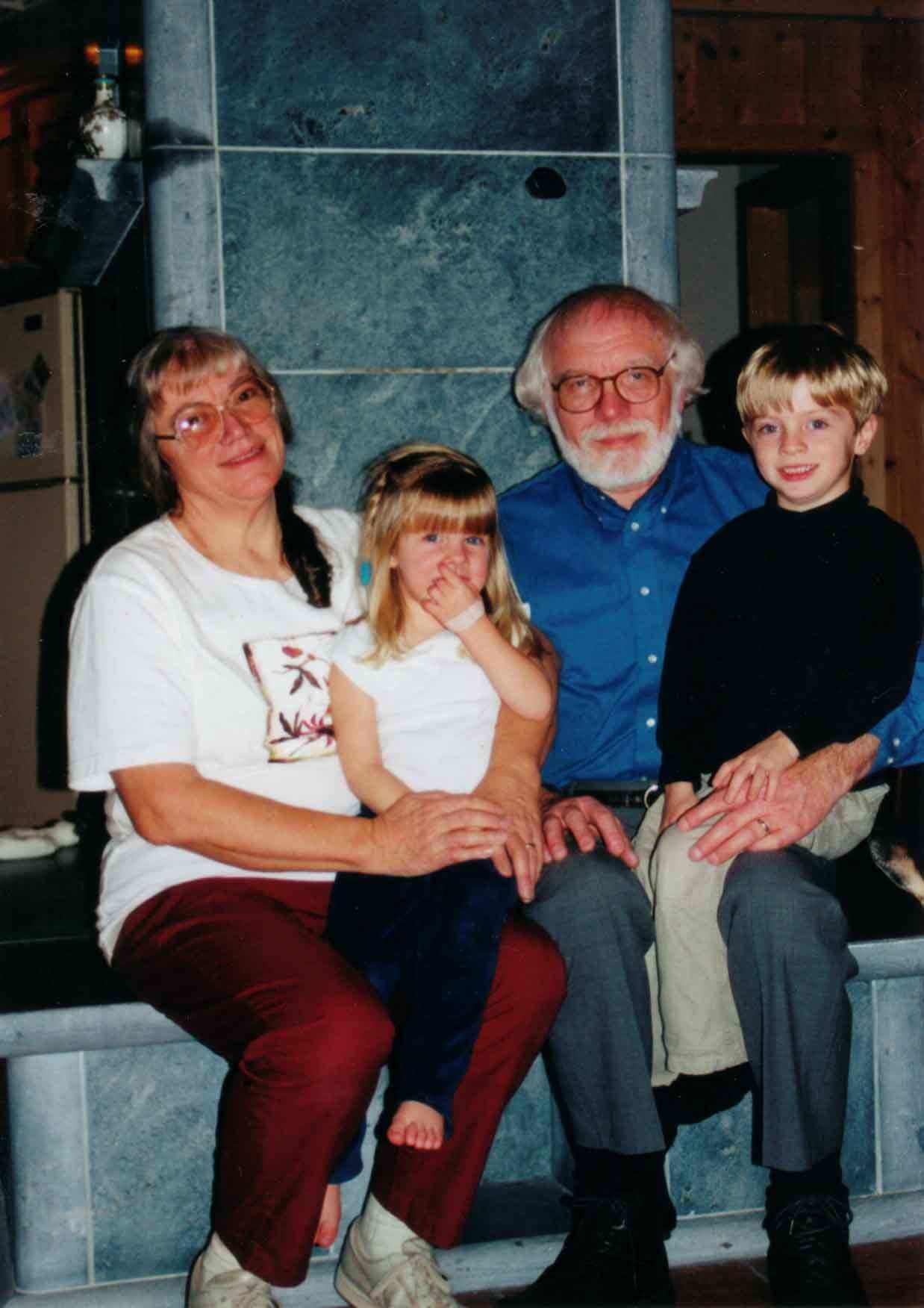
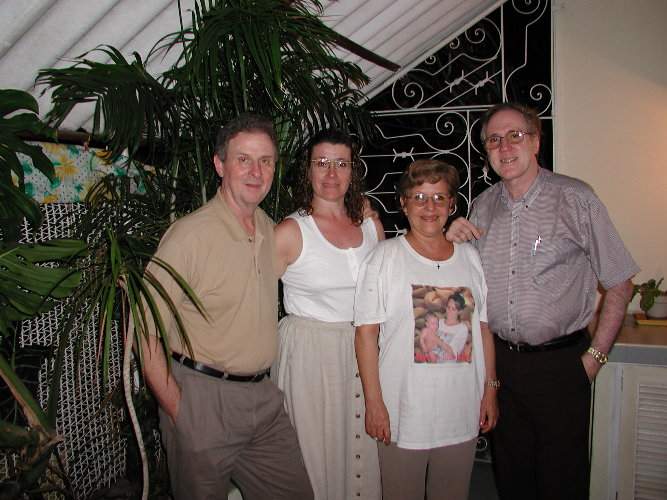
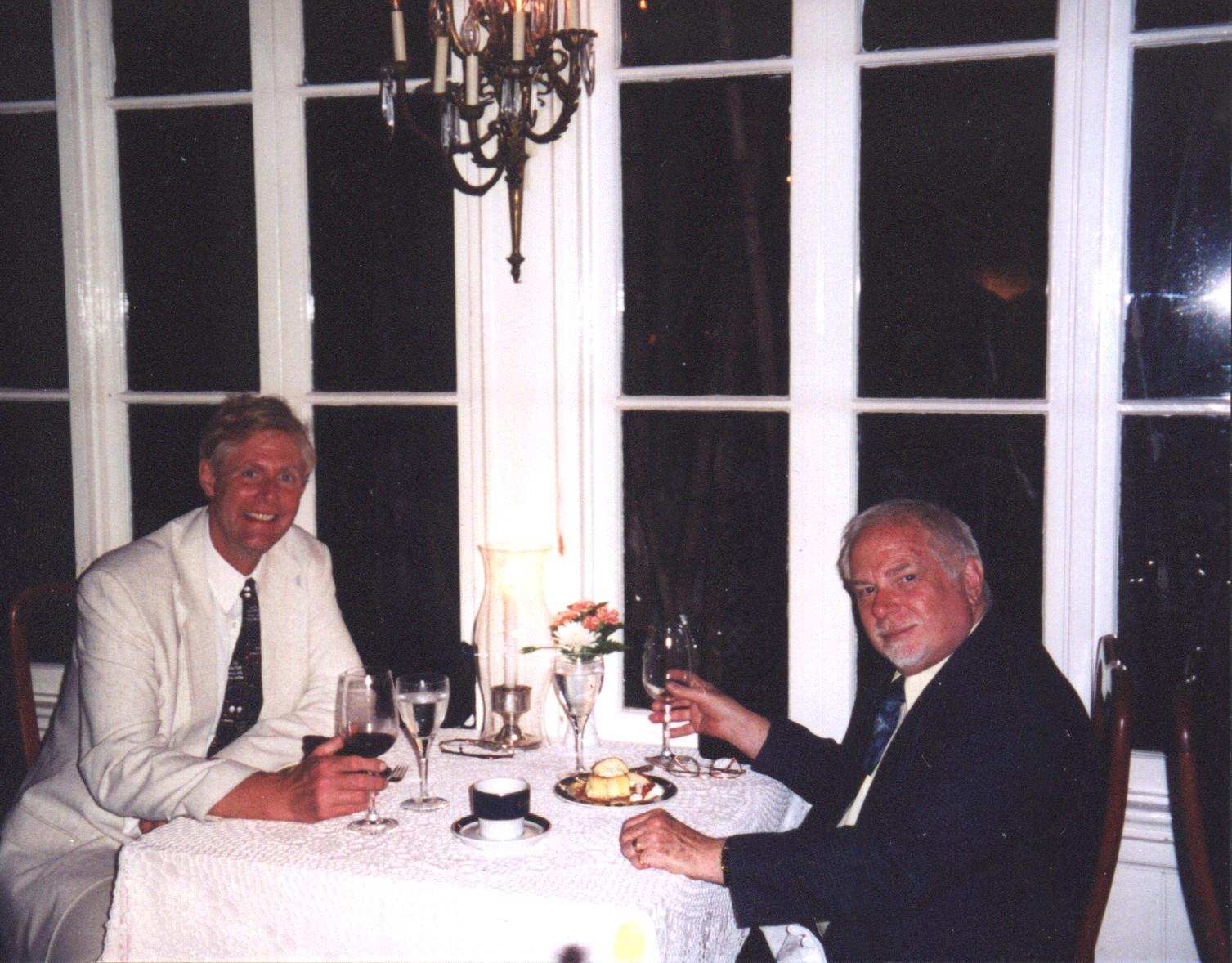
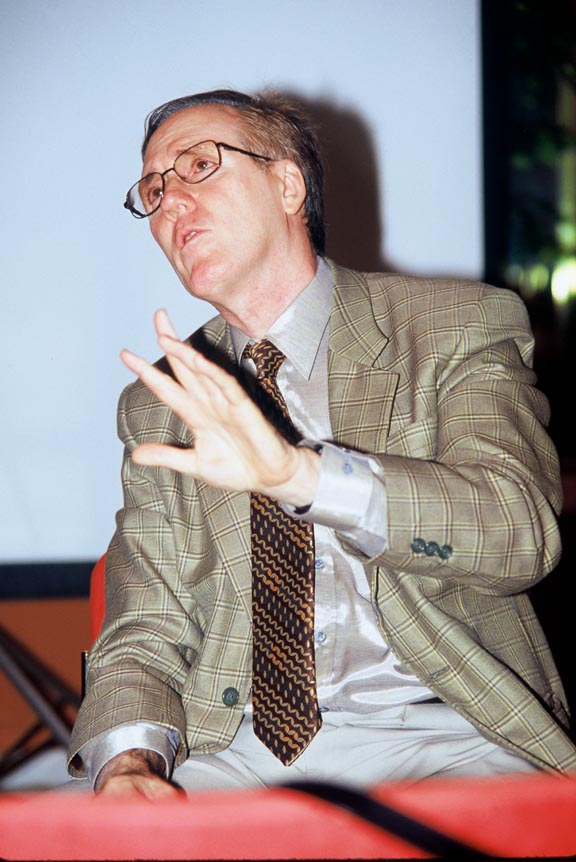
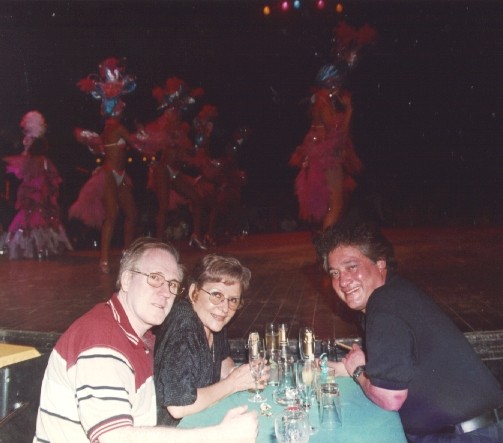
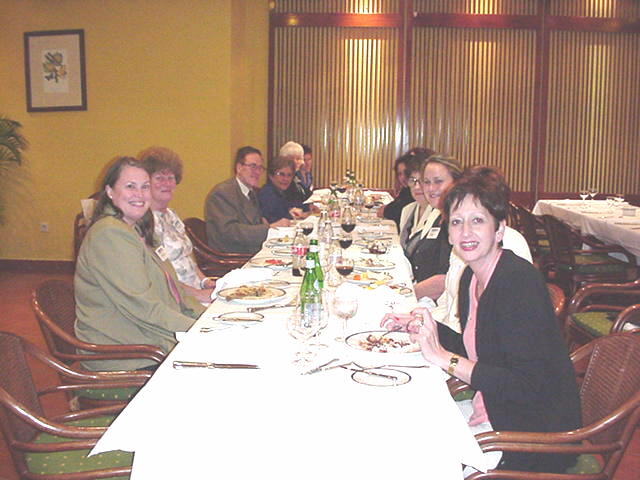
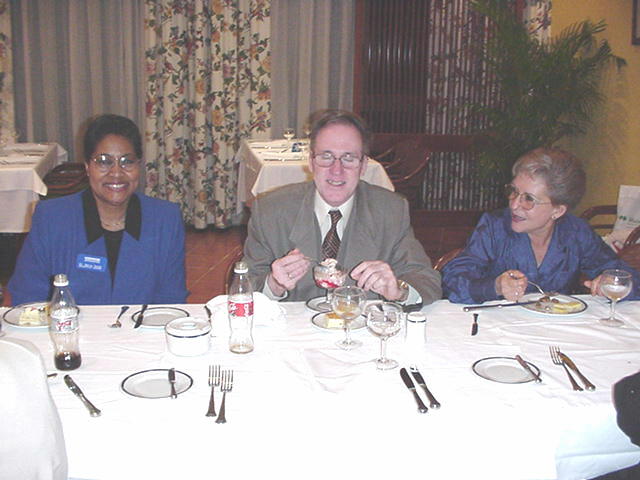
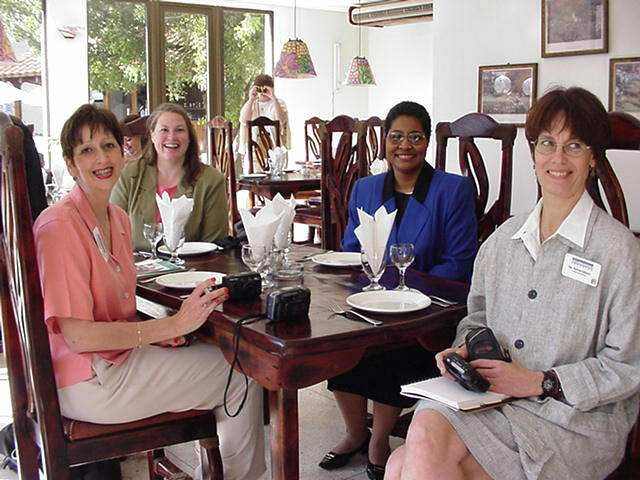
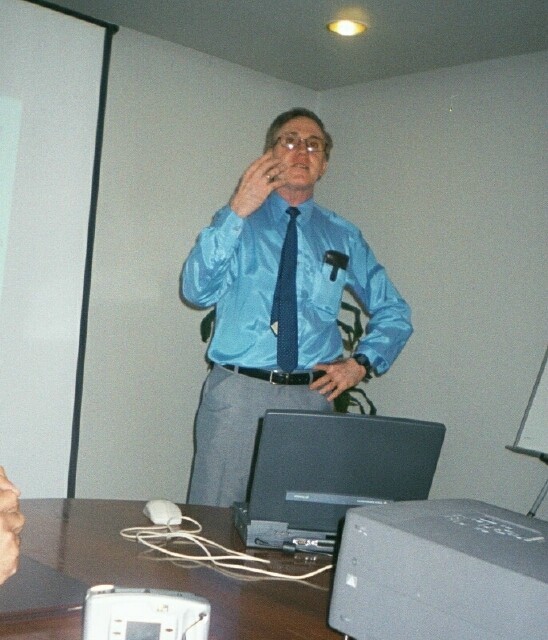
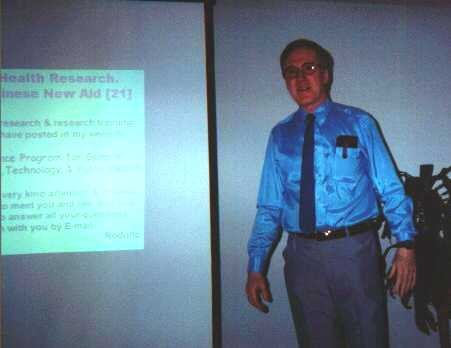
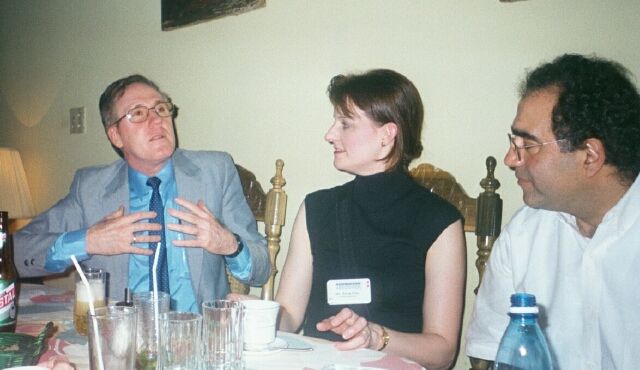
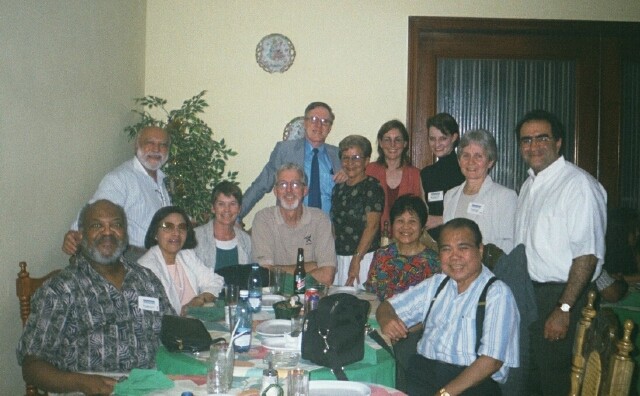
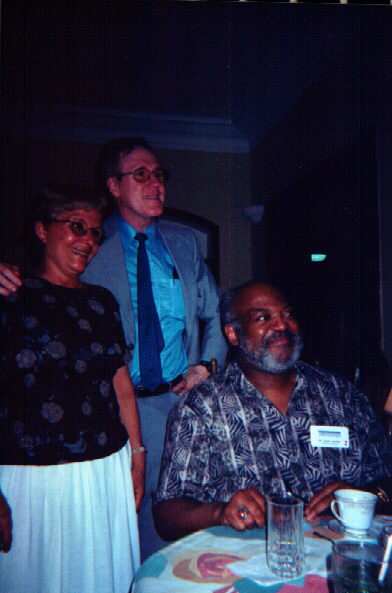
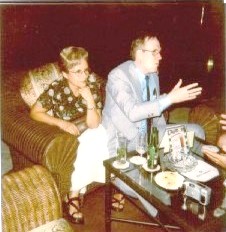
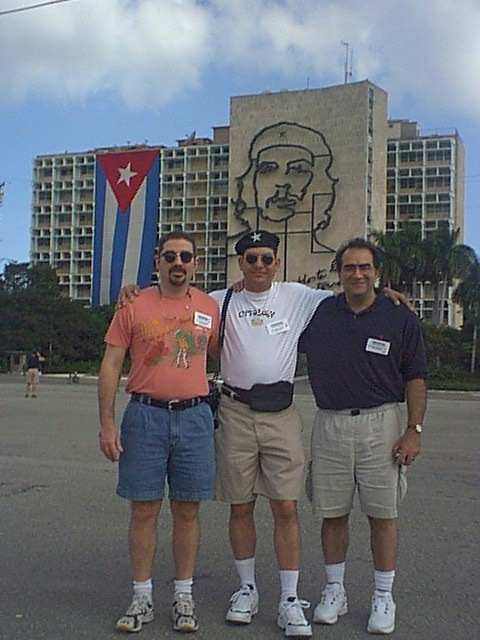
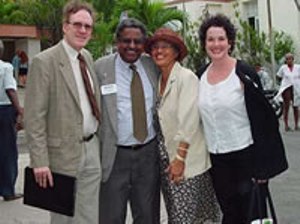
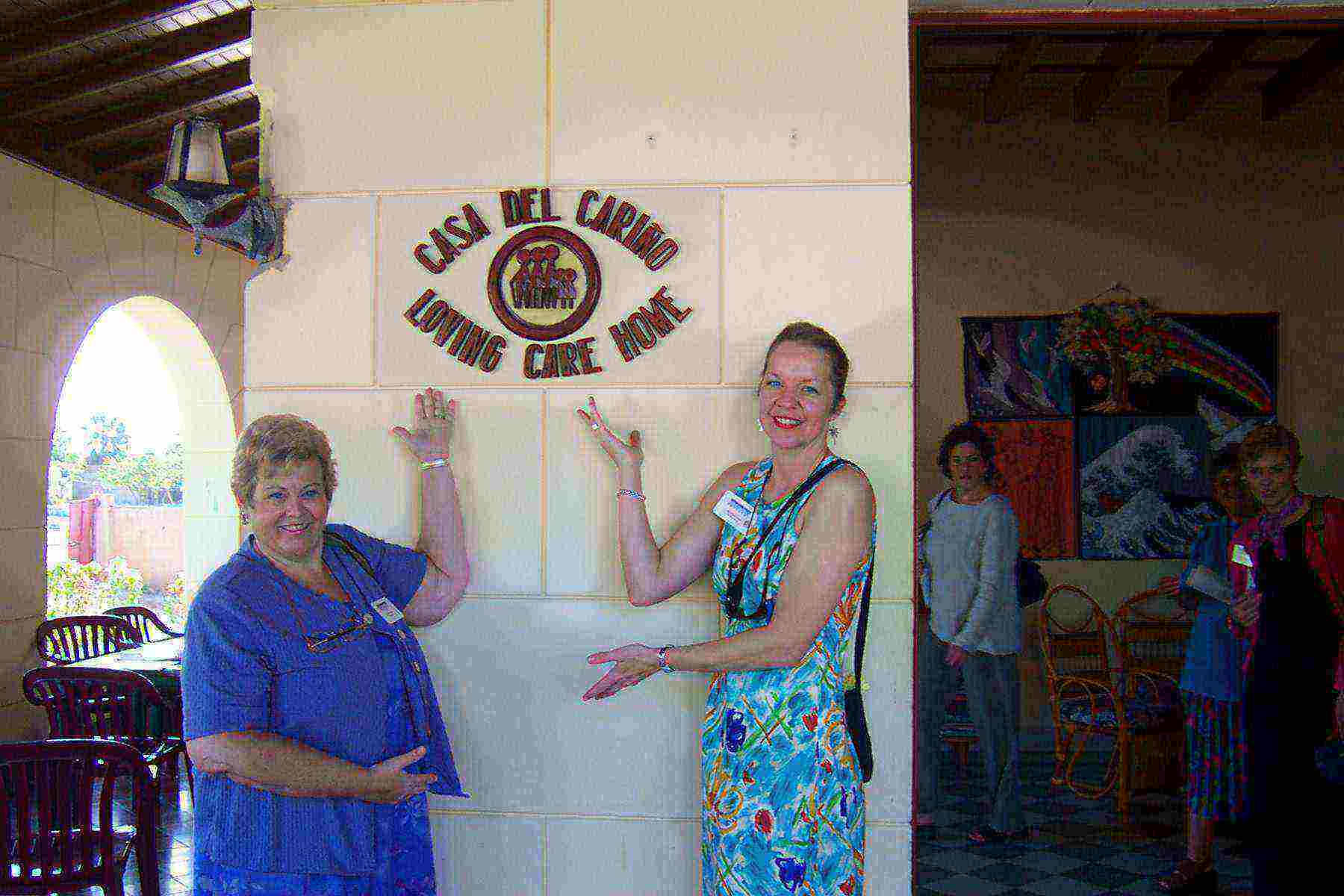
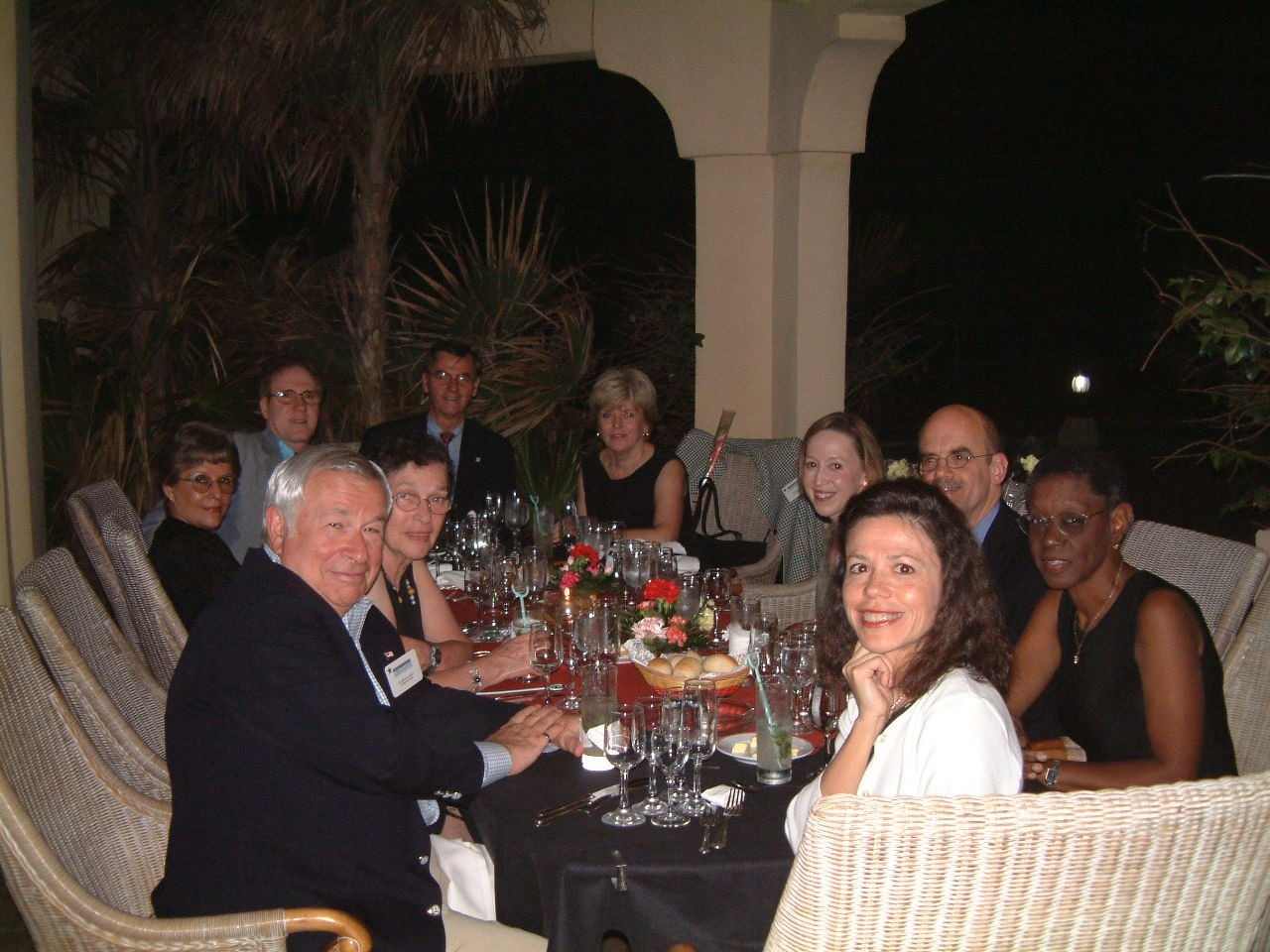
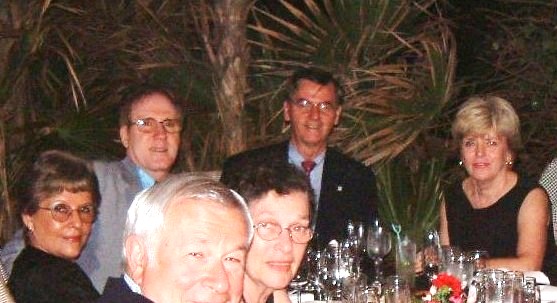
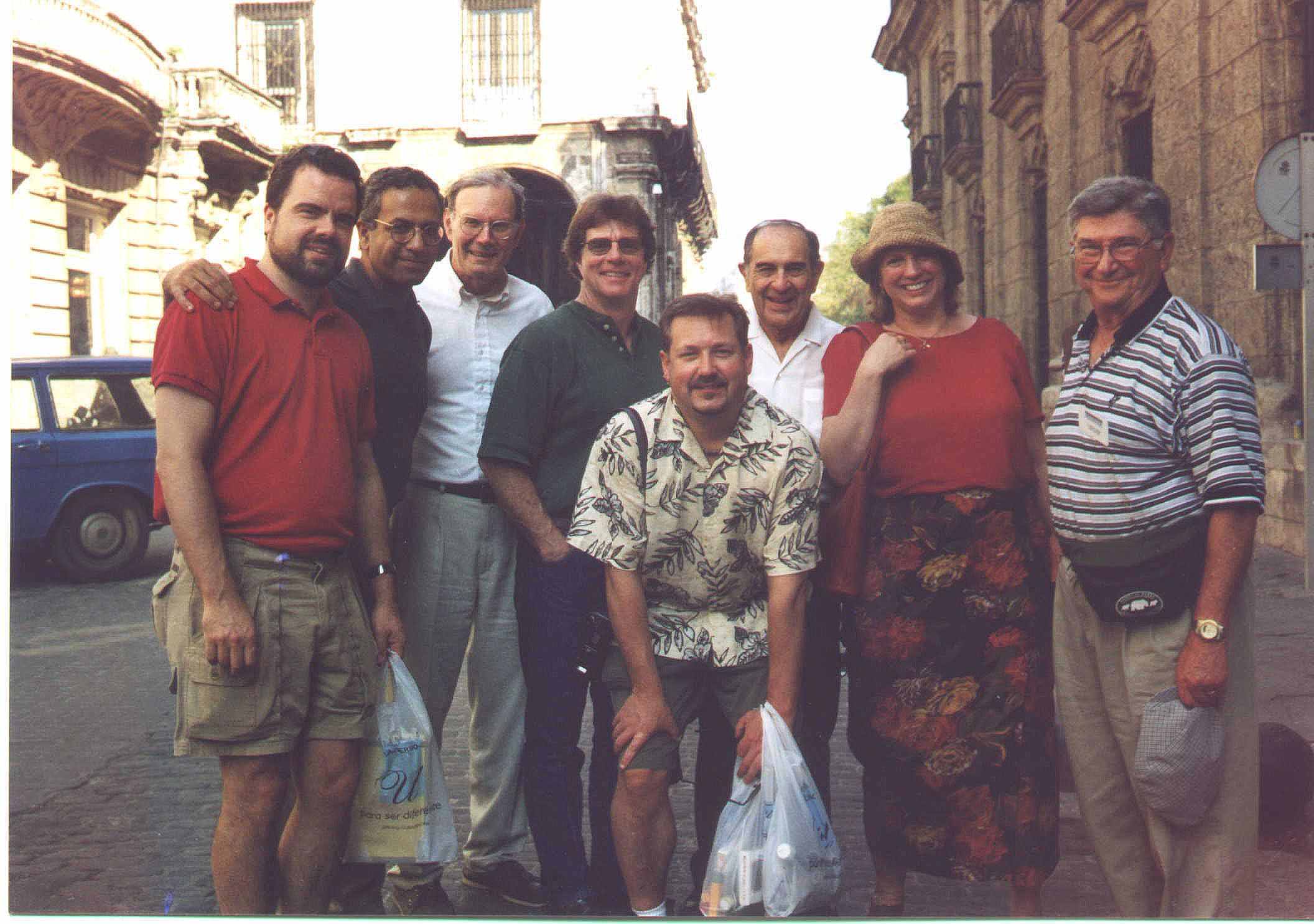
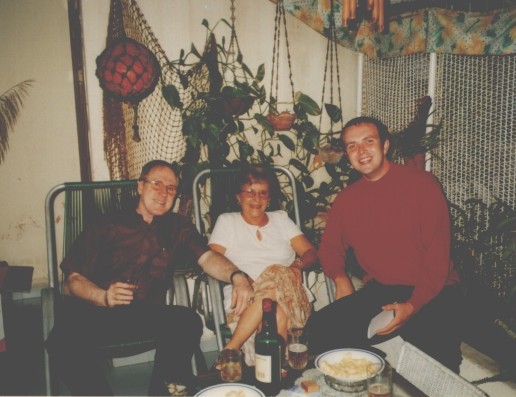
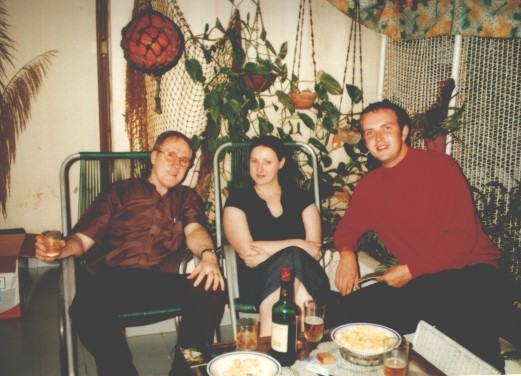
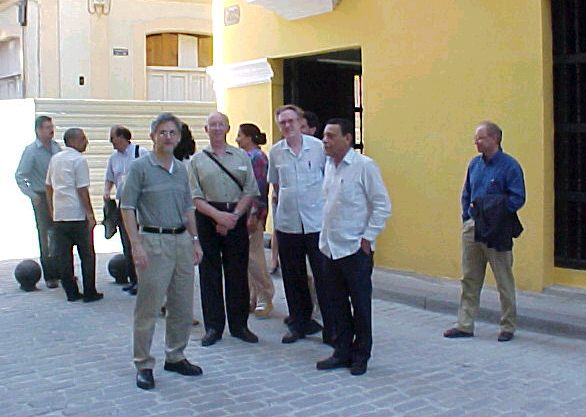
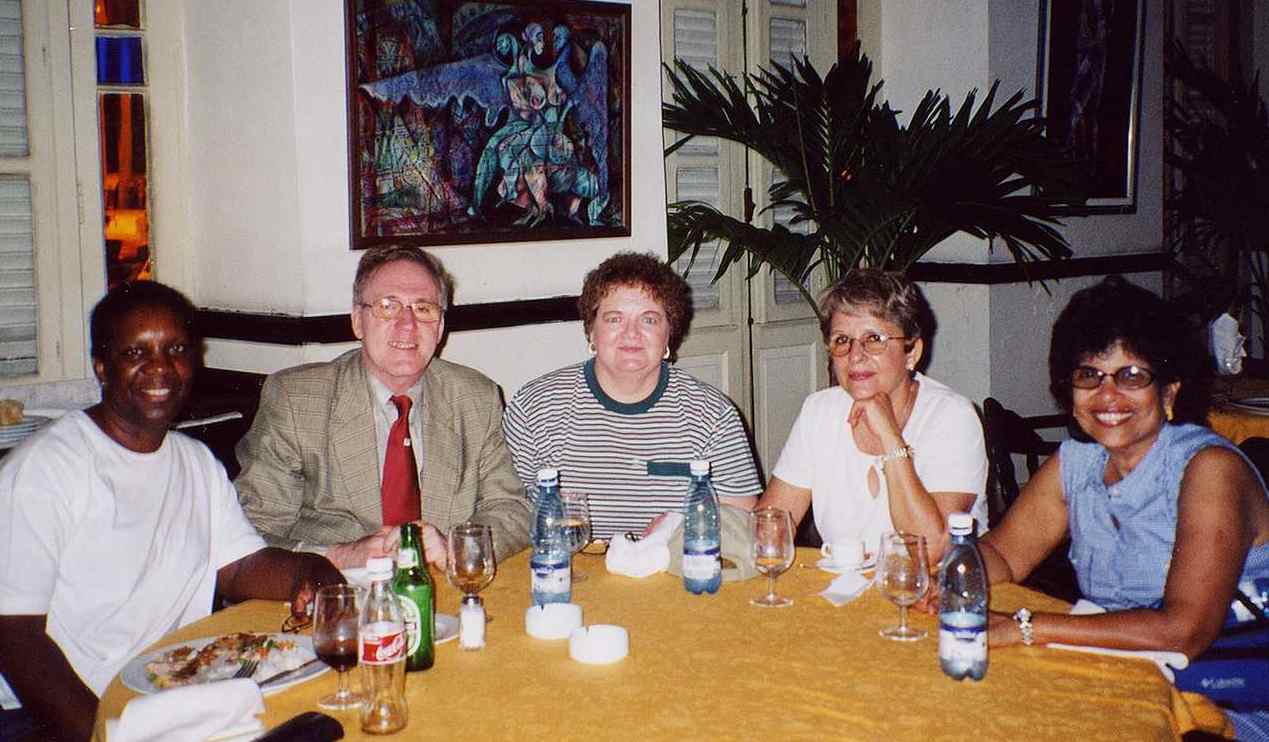
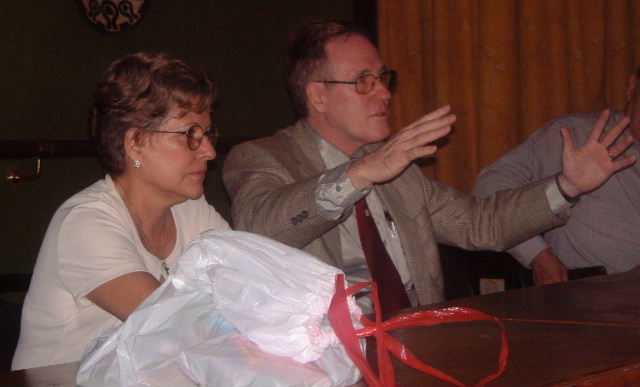
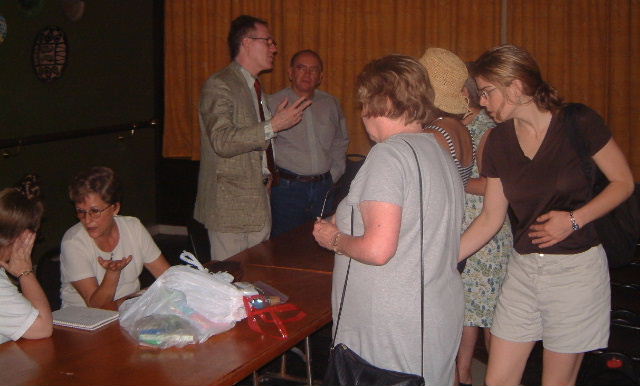
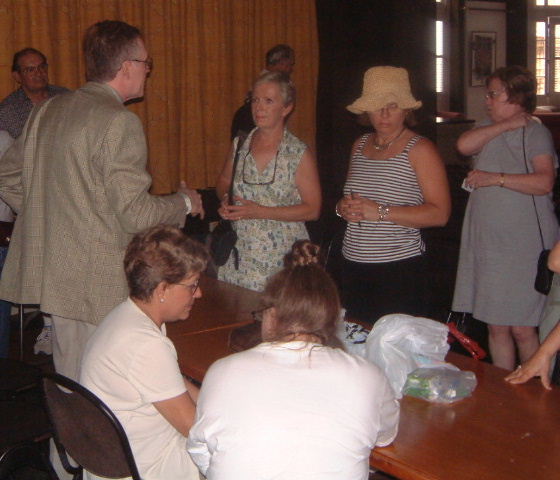
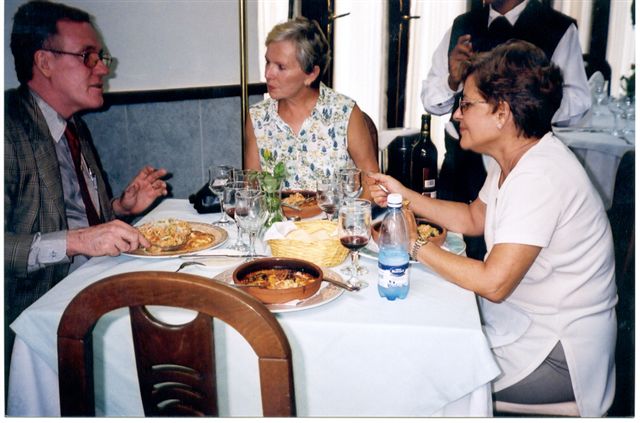
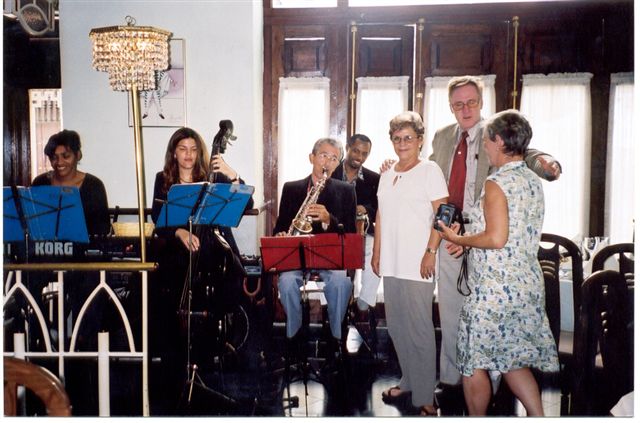
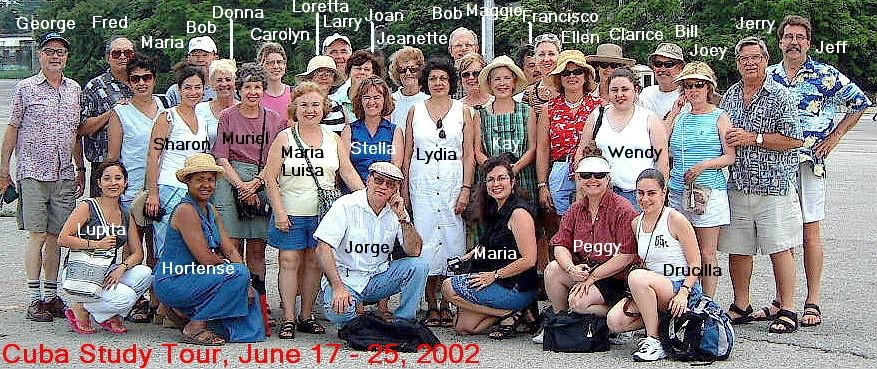
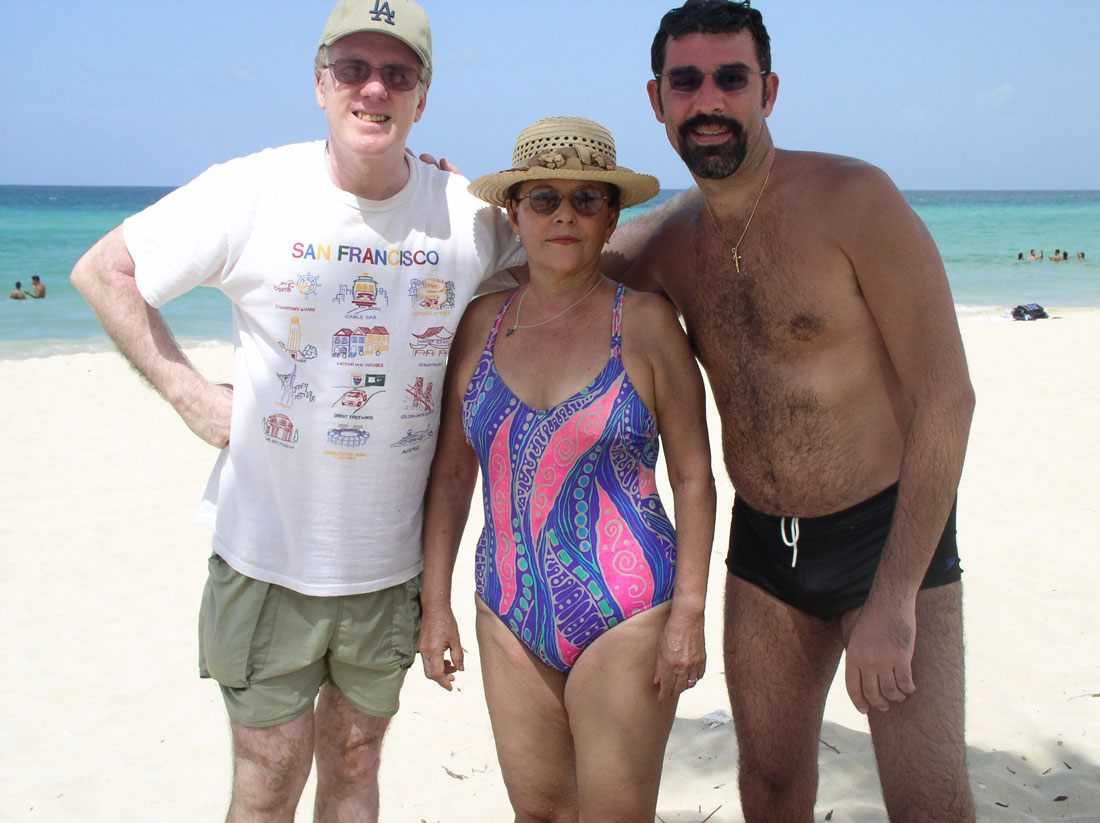
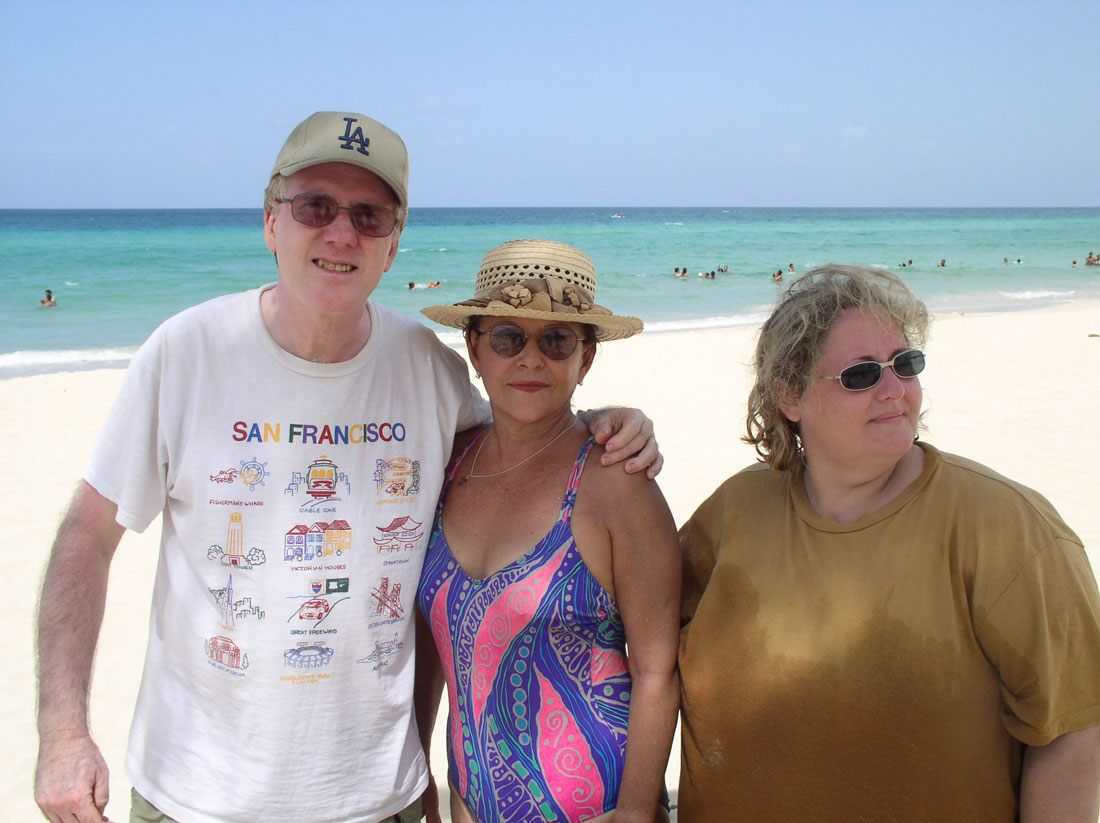
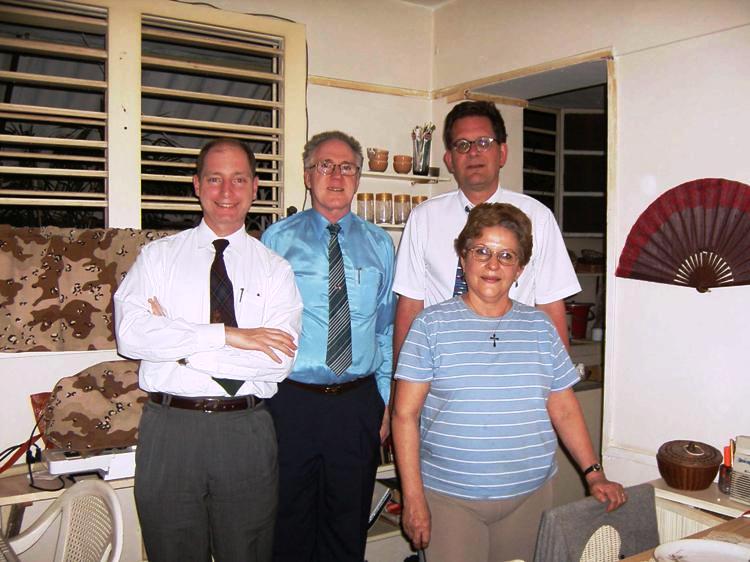
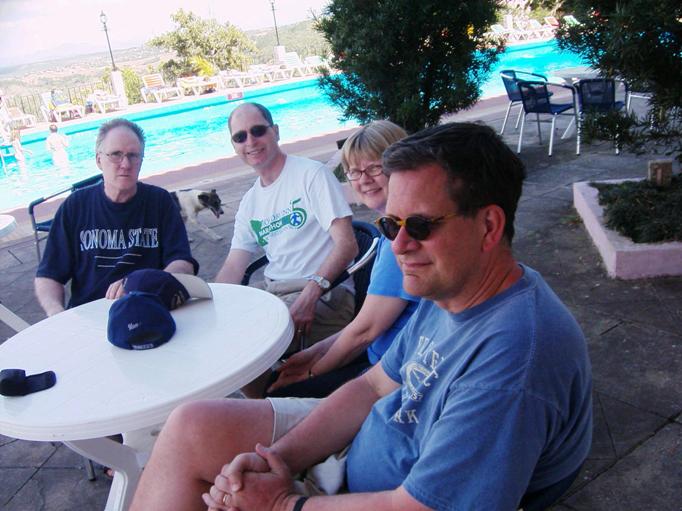
There are some photos taken during the talks and after them, by the PtP ambassadors, and in other moments with PtP friends or relatives that visited us. We hope you enjoy them as we do.
Lolita's Biosketch Back to the Index Page
Page created on June 22, 2001, and refreshed on April 13, 2009.