
TuMa's Herbal Health - Medicinal Herbs in the Native American and Folk Medicine Traditions. | home
How Herbs Work | Send TuMa a note | For Sale - Formulated Herbal Teas | For Sale - Tinctures | For Sale - Lip Balm and Salves | For Sale - Beverages | Price Lists | Oils and Salves | Cancer Formula Tea | Herbal Notes by TuMa | Aloe | Arnica | Black Cohosh | Calendula | Dandelion | Echinacea | Feverfew | Garlic | My Photos | TuMa's Favorite Links | Shipping | eBay Store
ALOE
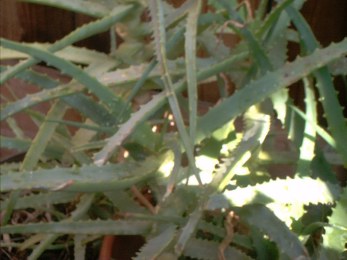
Photo by: TuMa
Aloe barbadensis, Aloe vera, Aloe capensis
COMMON NAME: Aloe vera, Barbados Aloe, Cape Aloe, Zanzibar Aloe, Socotrine Aloe, Bombay Aloes, and Turkey Aloes.
FAMILY: Liliaceae (same family as the tulip and garlic plants).
SOLVENTS: Water.
ACTIONS: Tonic, Purgative, Emmenagogue, astringent, and anthelmintic.
NOTES OF INTEREST: Aloe is native to Africa and the Mediterranean and has been used as a medicinal plant for centuries. It grows well in a dry environment. I have ignored my Aloe plants in the summer heat for weeks, they'll look skinny and yellowish. All I do is water them and they "plump" up and get that lovely green color you see in the photo above. From February to April they start to have "babies", little aloe plants growing near dirt level along the stalk. I've been known to give "Aloe babies" as gifts in cute little pots. Everyone should have a potted aloe in his or her kitchen.
PHARMACOLOGY: All three species share Anthrancene derivatives, especially anthrone-10-glycosyls, and flavonoids.
Anthrancene derivatives have purgative effects and this is what gives Aloe for internal consumption its laxative effect.
Acemannan is a compound from Aloe that helps boost the immune system.
Tests have shown that Aloe exerts an anti-inflammatory affect and, in a placebo controlled study, shows that the topical application of Aloe gel to give relief in burns and psoriasis.
THERAPUTIC USES:
Internal - for relief of constipation, but not to be used more than 3 consecutive days.
External - for relief of pain and inflammation of burns, psoriasis, and other mild skin irritations. Topical applications of aloe can be used as often as needed.
CAUTION: Aloe should not be taken internally during pregnancy.
PREPARATION: Aloe can be purchased as the drug store or a health food store. Be sure that you get Aloe gel or liquid that has no additives to it. Refrigerate after opening.
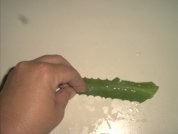
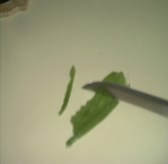
For topical application, cut a stalk of the Aloe near the bottom of the plant and near the center. Wash and trim any parts that are withered or damaged. Lay the leaf flat and slice it up the middle with a knife of thumbnail. Open the stalk up and scrape the gel and juice from the stalk with the dull edge of a knife. I also use it just like a bandage for burns in the kitchen.
DOSAGE: For internal use, follow the direction on the product packaging. For external application, use as needed.
CONTRAINDICATIONS: The elderly and the very young should not take Aloe internally. Do not take Aloe internally if you are pregnant.