
TuMa's Herbal Health - Medicinal Herbs in the Native American and Folk Medicine Traditions. | home
How Herbs Work | Send TuMa a note | For Sale - Formulated Herbal Teas | For Sale - Tinctures | For Sale - Lip Balm and Salves | For Sale - Beverages | Price Lists | Oils and Salves | Cancer Formula Tea | Herbal Notes by TuMa | Aloe | Arnica | Black Cohosh | Calendula | Dandelion | Echinacea | Feverfew | Garlic | My Photos | TuMa's Favorite Links | Shipping | eBay Store
Calendula
CALENDULA
By: TuMa
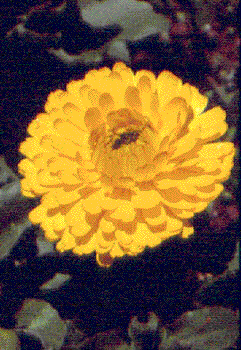
Calendula officinalis
|
Family:
|
Compositae
|
Medicinal Part:
|
The flowerheads or flower petals
|
Solvents:
|
Water, Alcohol
|
Also Known As:
|
Marigold, Pot Marigold
|
Notes of Interest:
|
Calendula is not native to the Americas, but originally comes from Egypt and the Mediterranean area. It now grows as a common garden plant and can be seen in spring gardens all over the country.
|
Actions:
|
Anti-inflammatory, anti spasmodic, lymphatic, astringent. Vulnerary, emmenagogue, anti-microbial, anti-viral, and anti-fungal.
|
Pharmacology:
Pharmacology:
|
Triterpenoid saponins: Sapogenin; oleonolic acid
Resin
Carotenoids
Bitter glycosides
Essential oil
Sterols
Flavonoids
Mucilage
|
Therapeutic Uses:
Therapeutic Uses:
|
The best use of this herb is in its antiseptic and anti-inflammatory properties. Calendula is an ingredient in may commercial products, such as cosmetics and preparations for bee stings and frostbite, but works best externally for wounds, sores, skin ulcers, sore throat, and internally for some digestive problems.
Calendula has enough astringent qualities to staunch bleeding, and when used with other herbs, such as comfrey leaves, can effectively reduce time for the healing of slow healing skin sores and ulcers.
As an infusion, it can be used as an eyewash for conjunctivitis.
As a tea, Calendula exhibits anti-viral, anti-microbial effects and stimulates the immune system for fevers and inflammation due to colds, flu and other viral infections.
As a tincture, it uses the bitter principle to promote bile production, and is known to reduce tumor growth and calms the nervous system.
|
Contraindications:
|
According to the PDR on herbal medicines, there have been no interactions reported for Calendula, and there are no known reasons to avoid Calendula at the recommended dosage levels.
Calendula is safe for pregnant women and nursing mothers.
|
Dosages:
|
Teas and Infusions: Can be made from dried, crushed Calendula flowers or petals by pouring 1 to 1-1/2 cups of boiling water over 1 to 2 grams of herb. (Approx. ¼ to ½ teaspoonful). Steep for Tea for 5 to 10 minutes. Infusion for 10 to 15 minutes.
Use as a gargle or mouthwash for sores in the mouth or sore throat.
Tea can also be used as a wash or added to gauze to apply to the skin as a compress.
Internally: Drink 2 to 3 cups a day.
Externally: A poultice can be applied 3 to 5 times a day. Alternate warm with cool (10 minutes each) for 20 minutes.
|
Notes and
Recommendations:
|
Calendula, like any other medication frequently applied to the skin, there is a slight risk of increased skin sensitivity. If redness and irritation occur, discontinue use immediately.
|