|
|
. |

 PEG is a lossy compression technique; this means visual information is lost permanently. The key to making JPEG work is choosing what data to throw away. PEG is a lossy compression technique; this means visual information is lost permanently. The key to making JPEG work is choosing what data to throw away.
What is JPEG?
JPEG (pronounced "jay-pag") is a standardized image compression mechanism. JPEG stands for Joint Photographic Experts Group,
the original name of the committee that wrote the standard.
JPEG is designed for compressing either full-color or gray-scale digital images of "natural,"
real-world scenes. For instance, It compresses the red-green-blue parts of a color image as three separate grayscale images-each compressed to a different
extent, if desired.
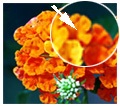 |
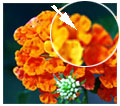 |
| maximum quality 20kb |
high quality 15kb |
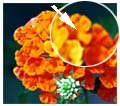 |
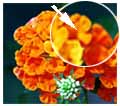 |
| medium quality 12kb |
low quality 11kb |
JPEG Lossy Compression
JPEG is a lossy compression technique. JPEG is "lossy", meaning that the image you get out of decompression isn't quite identical to what you originally
put in. Thus, JPEG is intended for compressing images that will be looked at by humans. JPEG is not a file format, rather it is a compression scheme. A
JPEG compressed image can be stored in a variety of formats. The JPEG approach involves consolidating colors with in the image in ways that the human eye
won't notice. The more consolidation that is done, the more efficient the compression is.
Compression Settings
As you will see, the amount of JPEG compression applied to an image is directly related to the amount of file size reduction. If the primary purpose of
the application of JPEG compression to an image is to reduce file size, then we need to first determine the amount of compression to be applied. The relative
importance of file size reduction varies from case to case, depending on circumstances. Their goal was to reduce the file size of natural, photographic -like
true- color images as much as possible without affecting the quality of the image as experienced by the human sensory engine.
|

 JPEG Format