PIGS
(Click on any of the
pictures to see a larger image)
In prehistoric times domestic
swine were herded through the forest, living on beechmast and
acorns, and would often have mated with wild boars. Like humans,
pigs are omnivores eating plant or animal material and will
forage and scavenge on household scraps. For this reason many
cultures, particularly those based in warmer climates where
diseases are difficult to control, consider pigs to be unclean
and unsuitable for human consumption.
In Britain, pigs were gradually
improved by importing more prolific and productive strains from
the Far east. Pigs were the cottager's animal and all rural
families, except the very poorest, would endeavor to own one.
Even into the first half of this century, the cottages in rural
villages had a sty in the garden.
Since the Second World War the
industrialisation of agriculture has completely changed all this.
Today pigs are selectively bred from a limited number of
specialist strains. They are reared in controlled environments on
carefully balanced diets and produce a standard, fast growing,
lean supermarket product. Of all our rare farm animals the pigs
have suffered the woprst and are still dangerously close to
extinction.
We try to have a selection of
our pig breeds on display at the Farm Park all the time with at
least two sows with piglets. The piglets are allowed free range
and may well meet you in the 'walk-ways' quite a long way from
mum. They are very inquisitive and intelligent animals and
greatly value their freedom to explore. By the time they are
about 10 weeks old we have to wean them and take them back to the
farm because they have discovered how to get inside the chicken
houses, and that they like scrambled eggs, which does not help
our rare poultry breeding programme !
IRON
AGE PIGS
Not a
Rare Breed as they are a hybrid
| These are the only
animals at the Cotswold Farm Park which are not a true
breed. They are a reconstruction of the type of pigs
which would have been herded through the forests by our
Iron Age ancestors. They were created here in the early
1970's by crossing Tamworh sows with a European wild boar
from London Zoo, for a scientific reconstruction project
which was later copied as the BBC 'Living in the Past'
series. The piglets are born striped nose to tail, just
like wild piglets, but we have selected for temperament
and ours are now fully domesticated. |
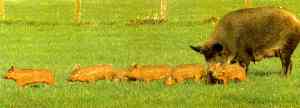 Iron Age litter on a mission to explore
|
Like many of our animals, the
Iron Age pigs have been popular set dressing from many historical
films but most recently "Sally" and "Gwinny",
two of our sows, starred in the big screen drama, "The Hour
of the Pig" which is now on general release. This amazing
story is based on a real medieval court case, in which a pig,
played by "Sally", stands trial for the murder of a
child.
TAMWORTH
PIGS
1973 - CRITICALLY RARE (less than 100 females)
1995 - CRITICALLY RARE (less than 100 females)
Luckily settlers
had taken Tamworths to Australia where they were still relatively
numerous, thanks to the continued practice of rearing pigs out of
doors, and the breeds resistance to sun burn. My father, Joe
Henson, who went to Australia to film camels with the BBC, was
able to visit the Woorak herd in New South Wales and to arrange
for the Rare Breeds Survival Trust to re-import three unrelated
boars. This project greatly helped the breed to increase in
numbers, but they are still critically rare.
GLOUCESTER
OLD SPOT PIGS
1973 - AT RISK (less than 500 females)
1993 - ENDANGERED (less than 170 females)
| They are the
traditional breed from the apple orchards of
Gloucestershire. It was said that the spots were 'bruises
from the falling apples', and that you didn't need to eat
apple sauce with Gloucester Old Spot pork because 'it
already tasted of cider'. Gloucesters thrive out of doors and are good
mothers producing quite large litters. They are always
careful not to lie on their piglets and they make warm
dry nests. However, they do not do well in intensive
indoor pig farms where thry get too fat. As a result,
like all the coloured outdoor breeds they are now
extremely rare. A renewed interest in keeping pigs out of
doors has helped to save them from extinction but numbers
are critically low.
|
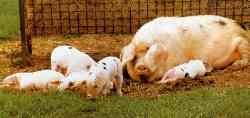 Gloucester Old Spot sow 'Primrose' with her
litter
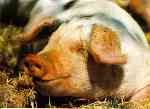
Gloucester Old Spot
piglet
|
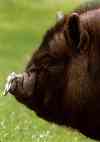
VIETNAMESE
POT BELLY PIGS
Not a
Rare Breed as they are not British
| A recent importation
and not classified as a rare breed. During the
Elizabethan period Neopolitan pigs, which resemble these
Vietnamese began to be imported from the Far East, and
were crossed with indigenous stock. They had a very poor
conformation for meat production but were far more
prolific than our native breeds, having litters of up to
30 piglets. The crosses between the old 'primitive' types
and the 'Far Eastern' pigs formed the basis of all our
modern breeds. The
Vietnamese Pot Belly is one of the smallest pig breeds
and was re-imported into this country as a model for
medical research although they have become popular as
pets. This is unfortunate as they are often abandoned
when they outgrow the kitchen.
|
 |
SADDLEBACK
PIGS
1973 -
Still common on commercial pig farms
1994 - ENDANGERED (less than 200 sows)
The Saddleback
is a mixture of the old Wessex breed from the South West of
England and Essex breed from East Anglia. They are regarded as
the best mothers of all British pig breeds, are good milkers,
rear large litters, and are very hardy and well suited to outdoor
systems. Sadly none of these attributes have been able to save
them and they are now very rare.
MIDDLE
WHITE PIGS
1973 - CRITICALLY RARE (less than 100 sows)
1993 - CRITICALLY RARE (less than 100 sows)
| Middle White pigs were
bred as a specialist pork producing breed. They have a
very short face with a snub nose, which dates back to
early introductions of Chinese stock in the late 1700's.
They were develpoed as a separate breed in the 1850's in
Yorkshie, and were very popular until some 50 years ago. They grow quickly, but if fed
too well lay down rather too much fat for modern tastes
and cannot compete with the modern industrial breeds.
They are our rarest British breed and extinction is
forever. Once a breed is lost we can never bring it back.
Can we allow any more of our historical or traditional
breeds to be lost ? We believe they should all be
conserved for future generations of farmers and livestock
breeders.
|
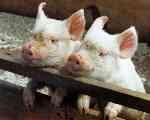 Middle White piglets
|
Back
to Top of Page
To
Sheep / To Pigs
/ To
Goats / To Cattle / To Poultry
and Waterfowl / To Other
Animals
Back
to Cotswold Farm Park