EQUINES: (Click on any of the pictures to see a larger image)

EXMOOR PONY SHETLAND PONIES SHIRE HORSES

EXMOOR PONY

1973 - CRITICALLY RARE (less than 200 mares)

1993 - CRITICALLY RARE (less than 200 mares)

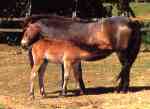
Directly descended from ancient celtic stock the Exmoor pony represents the ancestral pony of Europe. They have remained isolated on Exmoor in North Devon, England, for hundreds of years and are very hardy, and able to survive even the most extreme winters. When everything else on the moor is covered in snow they eat the prickly gorse bushes. Although there are a lot of ponies on Exmoor, many are modern introductions and very few are pure bred. Efforts are now being made to ensure that the pure Exmoor does survive both on and off the Moor. A new herd was established in 1993 on the Quantock Hills in Somerset. The Cotswold Farm Park 'Bemborough' herd was established in 1970, and is of a rare family line within the Exmoor breed.

Exmoor mare, 'Maisey' with her foal

SHETLAND PONIES

Not classified as a Rare Breed

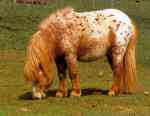
These miniature ponies were originally developed as the farm horse of the Shetland Islands where they were valued for their small size and relatively great strength. They were taken south during the industrial revolution and were widely used down the coal mines as 'pit ponies', pulling the coal trollies. Today they are popular childrens riding ponies and are the basis of the 'Thelwell' pony tradition.

Our oldest mare 'Unique' has had a number of spotted foals over the years which are registered in the miniature spotted pony register.

SHIRE HORSES

1973 - AT RISK (less than 1000 mares)

1993 - MINOR BREED (less than 2000 mares)

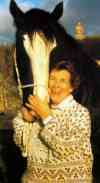
Joanna with Shire mare 'Lucky'

Heavy horses first appeared in this country during the Norman period and were used to carry knights in full armour into battle. They were later bred to do the heavy draught work on the farm and developed into separate regional breeds. Here in the shires or counties of England they became known as the Shire Horse, while in Scotland they were developed as the Clydesdale.

Shire horse remained the major source of power on the farm until they were replaced by the tractor in the 1940's. Today they are mostly kept by enthusiasts for demonstrations and exhibitors, and by breweries for show and promotional work, although they may still occaisionally be seen working the land.

Our Shire horses belong to our director John Neave's wife Joanna. She was a Senior nursing officer at Cheltenham General Hospital, and hence the name of her first foal, 'Cheltenham General'.

The gestation period for a horse is 11 months and so we foal our mares once every two years.


To Top of Page

To Sheep / To Pigs / To Goats / To Cattle / To Poultry and Waterfowl / To Other Animals

Back to Cotswold Farm Park